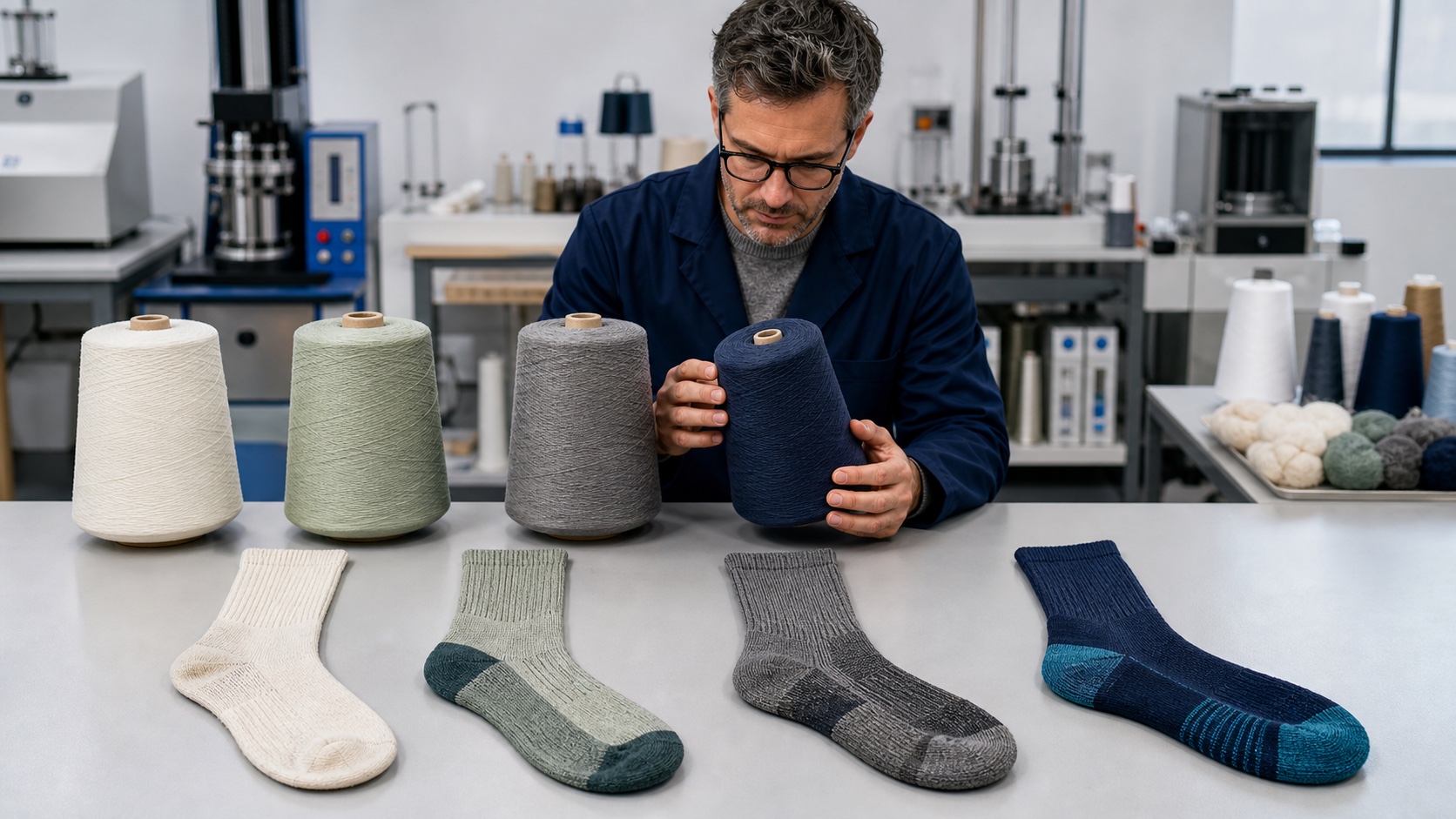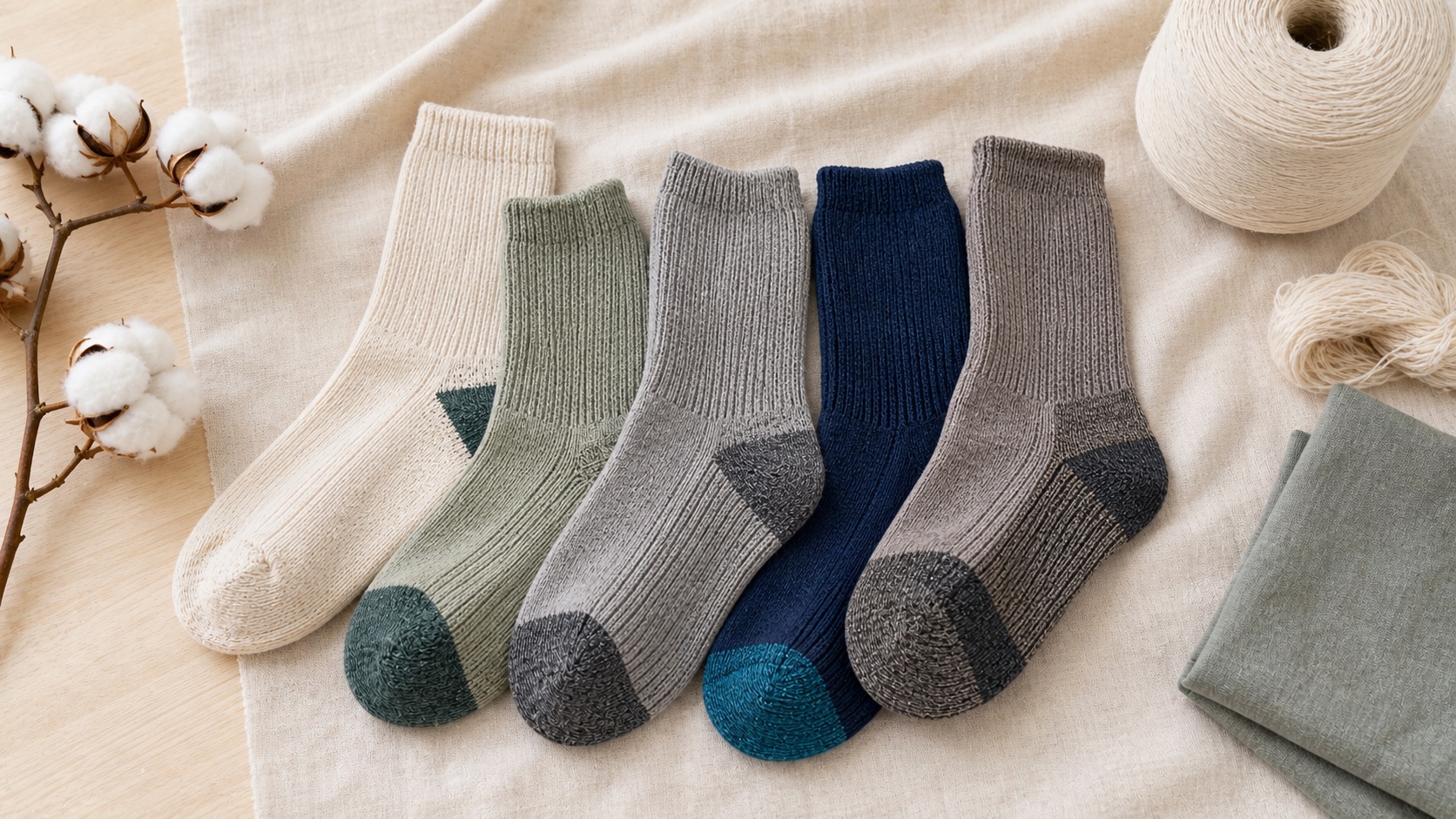
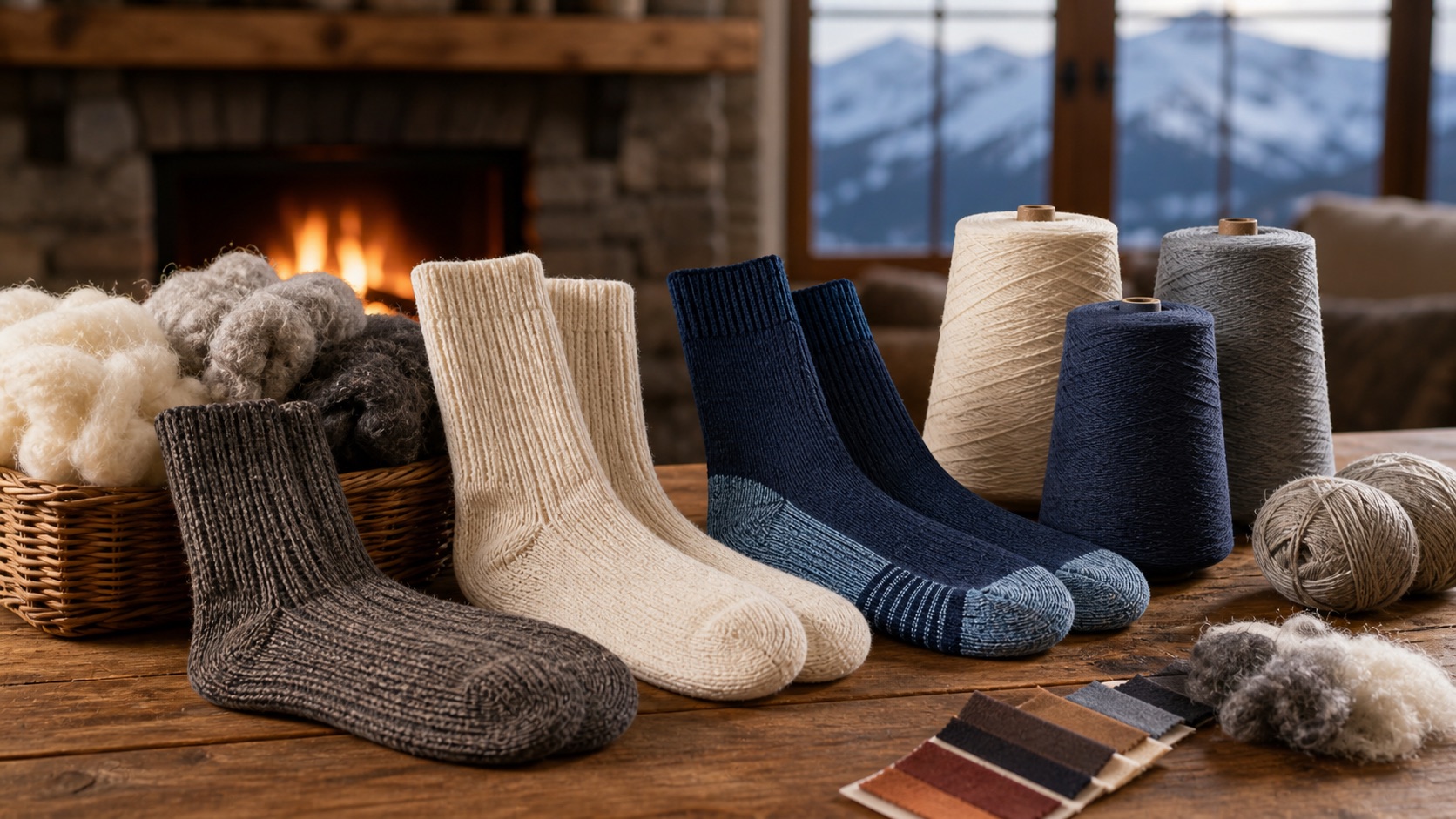
Wool socks range from fine dress styles to heavily cushioned hiking and winter pairs. Wool is valued because it can help keep the foot comfortable across changing temperatures and manage moisture vapor, but breed, yarn thickness, knit and blend all affect the result. “Wool” on a label is the beginning of the comparison, not the end.
Use this guide to choose between merino, traditional wool and blended constructions.
Merino Wool vs. Traditional Wool
Merino wool comes from merino sheep and is known for fine fibers that can feel soft against the skin. It is common in outdoor and everyday socks. Other wool types may use coarser fibers, creating a robust, traditional texture or a warm boot sock.
Softness depends on fiber diameter, yarn and finishing. People who find one wool itchy may still tolerate a fine merino blend, while others prefer a fully wool-free material.
Why Wool Socks Use Blends
Performance wool socks often add nylon for durability and elastane for fit. Polyester may support drying and construction. A pure-wool label does not automatically mean better performance if the heel wears quickly or the sock loses shape.
Think of the blend by function:
- Wool contributes temperature regulation, moisture buffering and odor resistance.
- Nylon reinforces high-friction zones.
- Polyester can support durability and drying.
- Elastane keeps the arch, heel and cuff aligned.
The location of each yarn matters as much as its percentage.
Choose Weight and Cushioning
Lightweight wool socks fit dress shoes, casual footwear and warm-weather hiking shoes. Midweight styles suit boots and everyday cold conditions. Heavyweight socks add insulation and cushioning but need more shoe space.
Do not force a thick wool sock into a fitted boot. Toe compression and restricted circulation can make the foot feel colder. Select the shoe and sock as one system.
Match Wool Socks to the Activity
- Everyday wear: smooth toe, moderate height and a durable wool blend
- Business wear: fine-gauge merino, flat seam and refined ribbing
- Hiking: reinforced heel and toe, targeted cushioning and boot-compatible height
- Skiing: over-the-calf height, close fit and low bulk in the boot
- Sleeping or lounging: soft, loose-feeling warmth without a restrictive cuff
See our separate guides for hiking socks and ski sock materials.
Are Wool Socks Only for Winter?
No. Fine merino blends can work in mild or warm weather because comfort depends on moisture, knit weight and footwear as well as insulation. A thin wool sock may feel less warm than a thick cotton crew.
For summer, choose a lightweight construction with ventilation and an appropriate shoe. For winter, add thickness only if the boot has room.
How to Wash Wool Socks
Follow the label, since washable wool treatments and blends differ. A cautious routine uses a gentle cycle, cool water and wool-compatible detergent. Avoid bleach and high dryer heat unless specifically permitted. Reshape and air dry when directed.
Wash dark and light colors separately. Turn cushioned socks inside out so the inner loops are cleaned, and store them completely dry.
Frequently Asked Questions
Are merino wool socks itchy?
Fine merino often feels softer than coarser wool, but sensitivity varies. Check the blend and try the sock against the skin.
Do wool socks shrink?
They can if exposed to unsuitable heat or agitation. Follow the exact care label and avoid assuming every wool blend is machine-dryable.
How much wool should a good sock contain?
There is no universal best percentage. A balanced blend may outperform a higher-wool sock in durability, fit or activity-specific use.
Explore our wool sock collection by weight, height, cushioning and merino content.