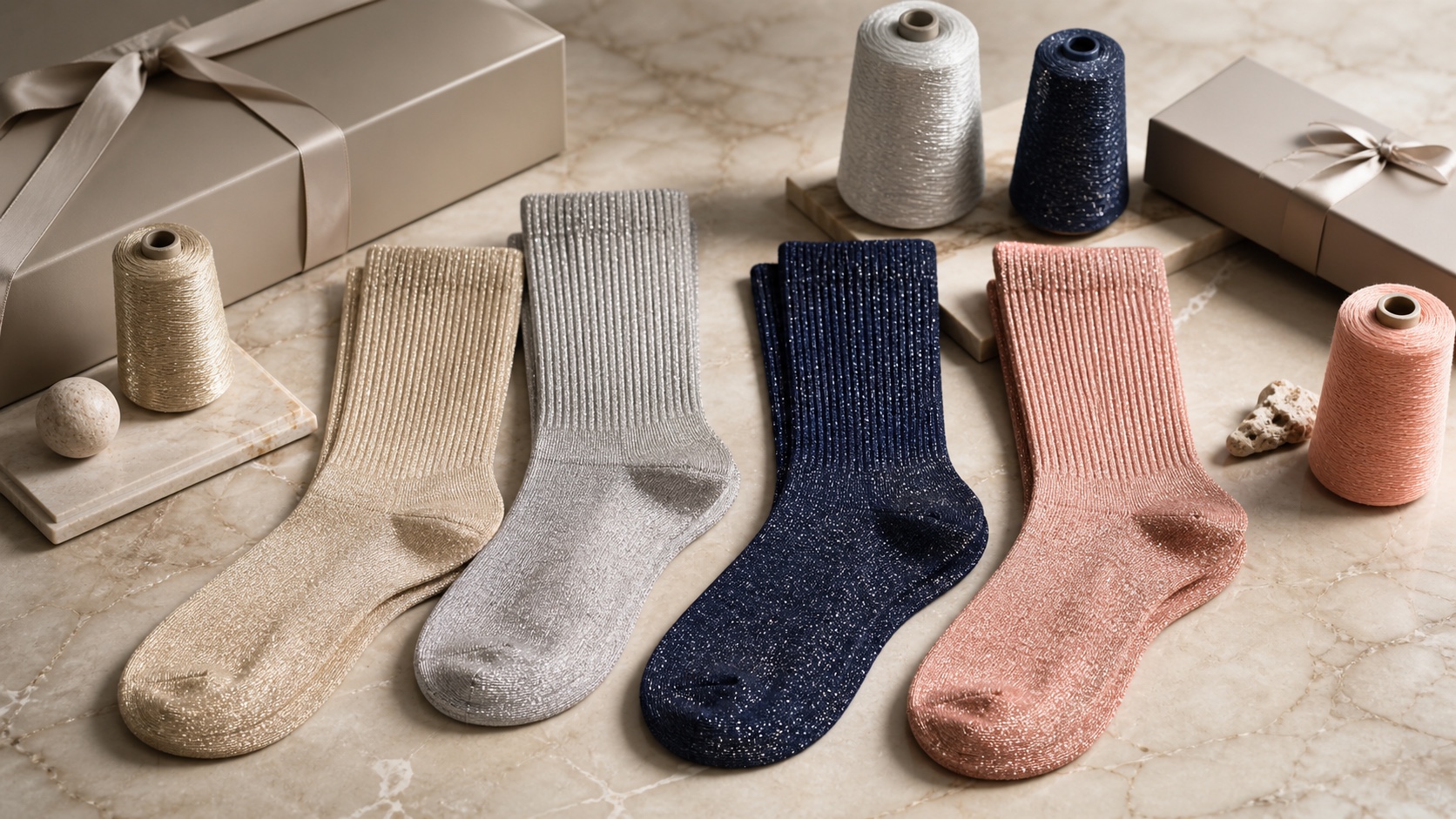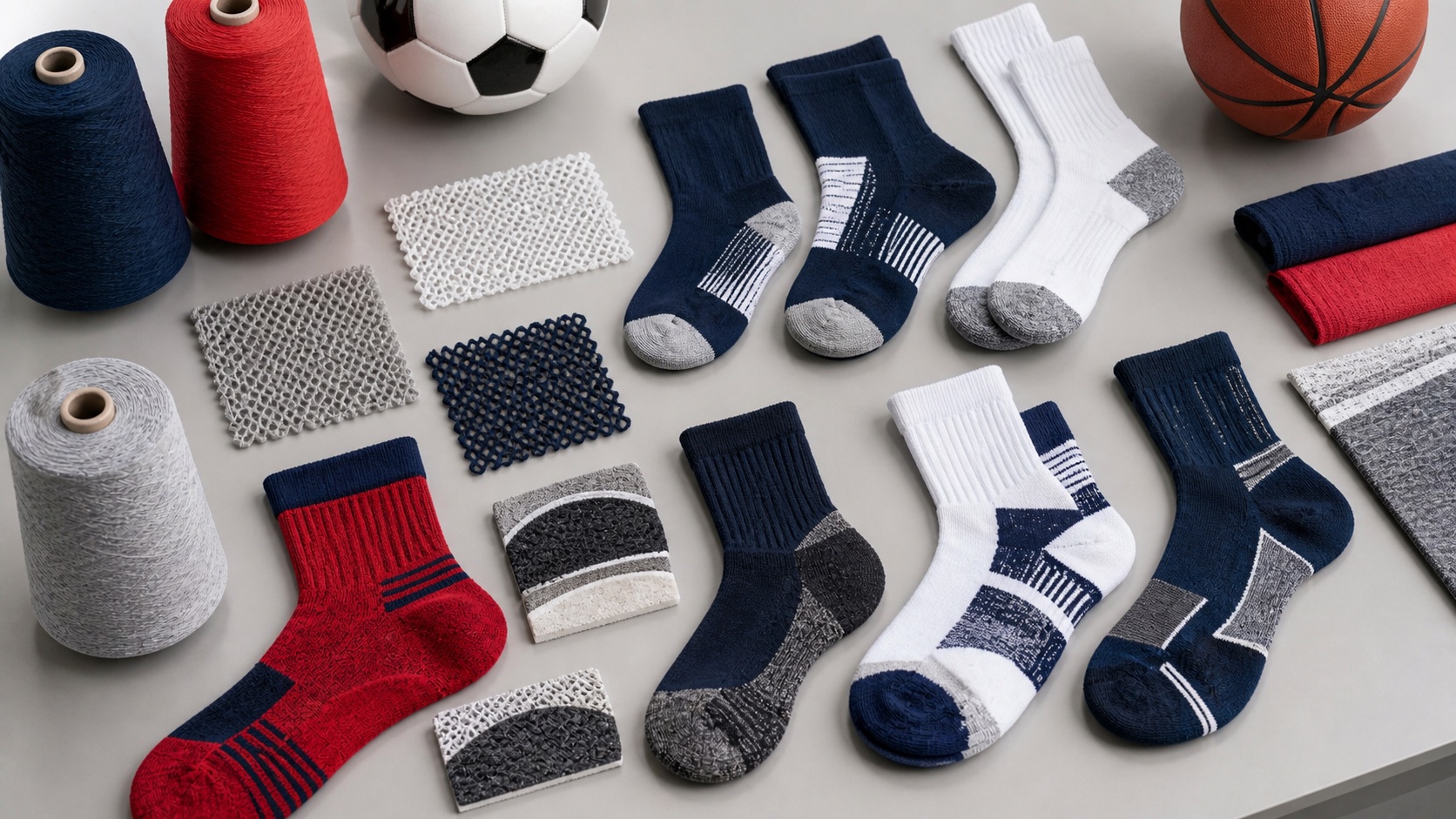
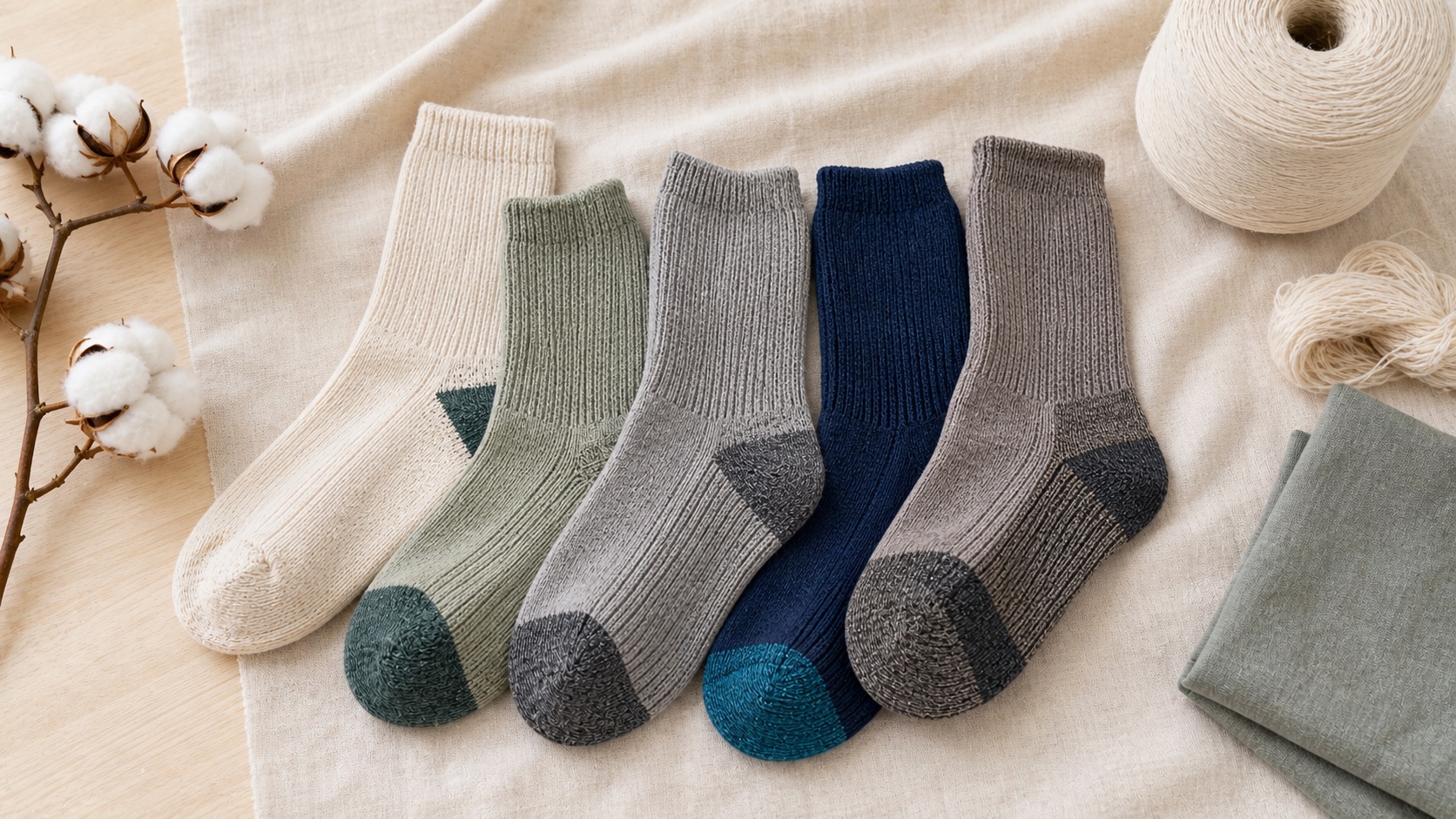
Cotton socks are a familiar choice for work, school and relaxed daily wear. Cotton feels soft, accepts color well and can be knitted into everything from a thin dress sock to a cushioned crew style. Yet the word “cotton” alone does not tell you how a pair will fit or perform. Fiber blend, knit construction and intended activity all matter.
This guide explains when cotton socks work well and what to check before buying.
Why People Choose Cotton Socks
Cotton is a natural plant fiber with a comfortable hand feel. In everyday socks, it can provide:
- Softness against the skin
- Good breathability in moderate conditions
- A wide range of colors and patterns
- Familiar washing and wearing characteristics
- Versatility for casual, school and office styles
Cotton also absorbs moisture. That can feel comfortable during light daily use, but a damp cotton sock may dry more slowly than a technical synthetic design. For prolonged running, hiking or skiing, activity-specific blends often manage moisture more effectively.
Why Most Cotton Socks Are Blended
Look at the full fiber label and you will often find cotton combined with polyester, nylon and elastane. The additional fibers are not simply filler; each can serve a useful purpose.
- Nylon or polyester can improve abrasion resistance, shape retention and drying.
- Elastane or spandex helps the cuff, arch and body recover after stretching.
- Acrylic may add loft, softness or warmth in selected designs.
A high cotton percentage creates a cotton-rich feel, while a more technical blend can improve durability and fit. Choose according to the use rather than treating one percentage as universally best.
Combed, Mercerized and Organic Cotton
Product labels may describe how the cotton was selected or processed.
Combed cotton has been processed to remove shorter fibers, helping create a smoother yarn. Mercerized cotton is treated to increase luster and dye affinity and is often used in refined dress socks. Organic cotton refers to the farming and certification system; look for a named, verifiable certification rather than a vague sustainability claim.
These terms describe particular attributes, but construction quality still depends on yarn, knitting, finishing and quality control.
Match the Knit to the Occasion
Lightweight cotton socks fit easily in dress shoes and warm-weather casual footwear. A medium crew sock suits general daily wear. Terry cushioning under the foot adds softness for sneakers and work shoes but occupies more space.
Consider these details:
- A smooth toe seam for fitted shoes
- Reinforcement at the heel and toe
- Ribbing that holds without squeezing
- Mesh or pique panels for warm conditions
- Cushioning located where the shoe has room
Choose a height that rises above potential shoe-rub areas. For low shoes, a properly designed no-show sock may create the desired invisible look.
When Another Material May Be Better
Cotton is not the automatic choice for every activity. For heavy perspiration, repeated athletic use or cold conditions where dampness is a concern, compare synthetic or merino blends. Our sports sock material guide explains the tradeoffs.
The right answer may also be a cotton blend rather than either 100% cotton or fully synthetic construction.
How to Wash Cotton Socks
Read the care label first, especially for dark colors, prints or mixed-fiber pairs. In general:
- Separate colors.
- Wash at the temperature stated on the label.
- Use a normal amount of mild detergent.
- Avoid excessive dryer heat, which can affect shrinkage and elastic life.
- Dry completely before storing.
Turning socks inside out can help clean the area closest to the skin. Pair them after drying rather than stretching one cuff around both socks, which may strain the elastic.
Frequently Asked Questions
Are 100% cotton socks better?
Not for every use. A small amount of synthetic fiber or elastane can improve durability, fit and recovery. Choose the blend that matches your priority.
Are cotton socks good for summer?
Lightweight cotton blends can be comfortable in everyday summer use. For intense exercise or very sweaty conditions, a faster-drying sports blend may be preferable.
Why do cotton socks shrink?
Cotton fibers can change dimension with heat and washing. Follow the label, avoid excessive heat and select the correct starting size.
Browse our cotton sock collection for everyday crews, low-cut pairs and cotton-rich styles.