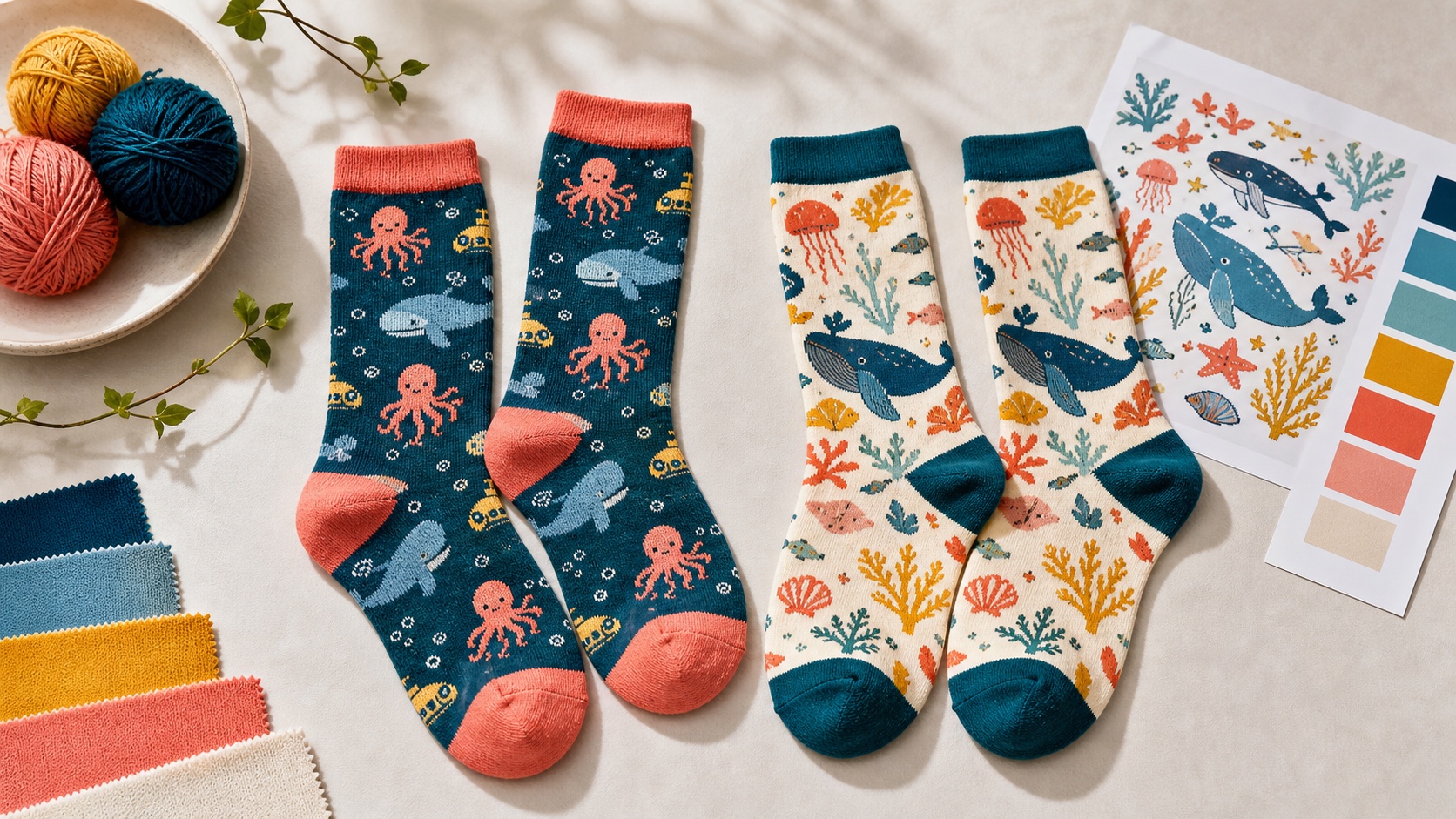
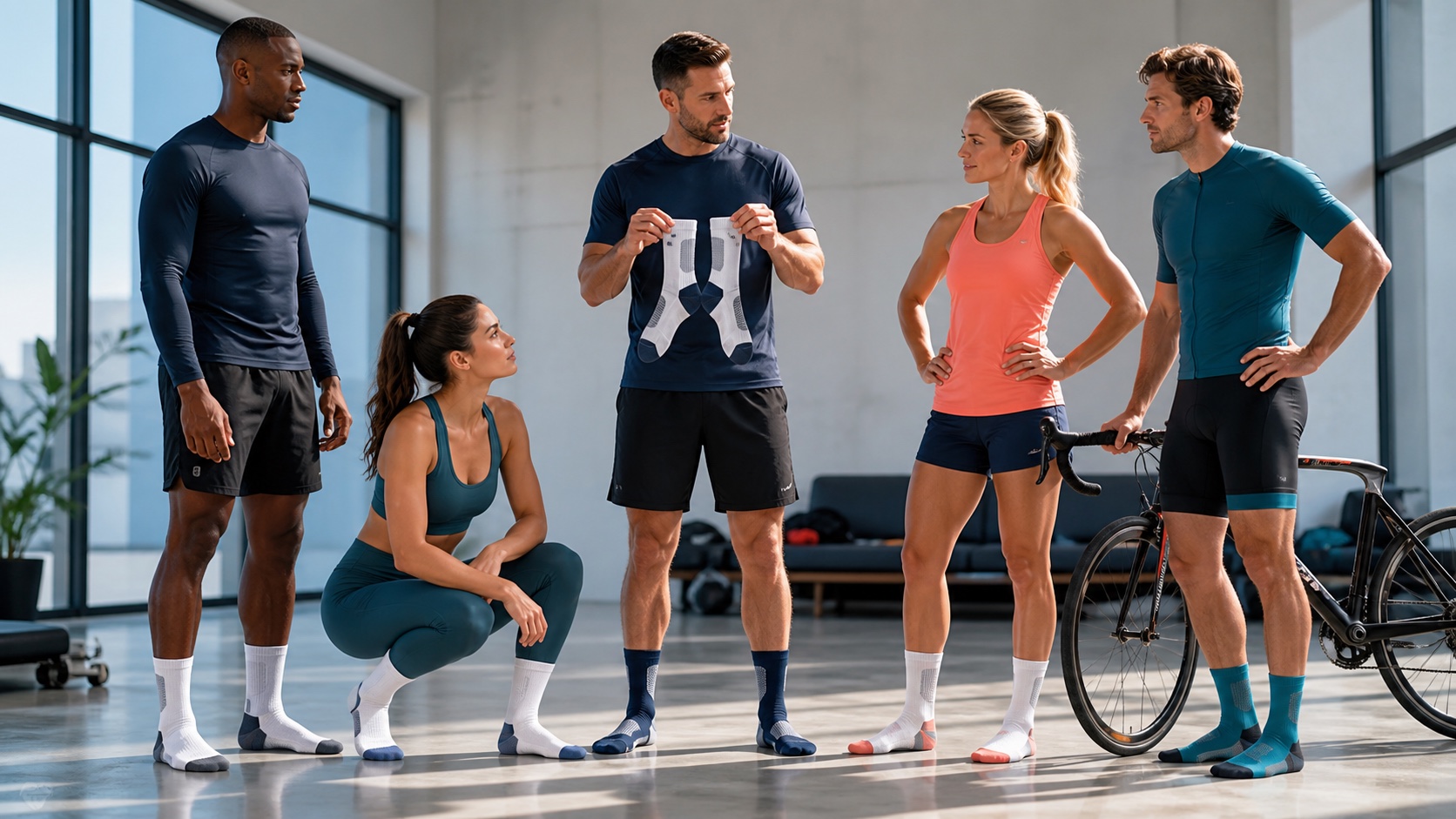
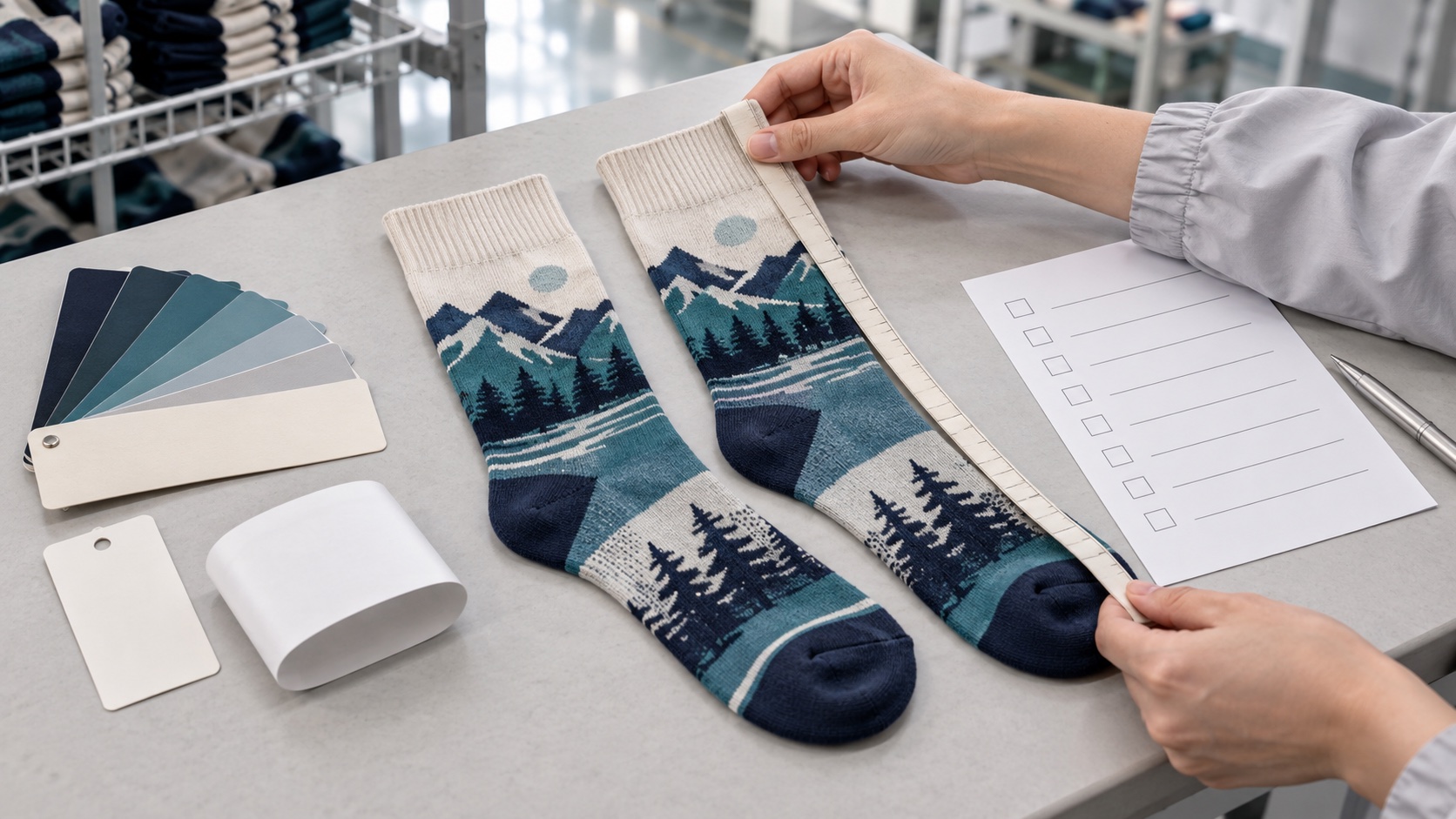
01What parts of a sock can be customized?
A custom sock is more than a standard pair with a logo. Buyers can define the product category, height, material, knit structure, cushioning, fit, colors, artwork, functional features, size system, labels and packaging. The practical options depend on the intended use, order quantity, machinery, yarn availability and artwork method.
The most reliable approach is to prioritize the details the customer will notice or rely on, then keep secondary variations focused for the first order.
- Sock category, height and silhouette
- Yarn blend, hand feel, weight and thickness
- Logo, pattern, color and placement
- Measurements, size grading and fit direction
- Grip, cushioning, mesh, reinforcement or compression zones
- Retail packaging, labels, barcodes and carton presentation
02Choose a logo and artwork method that suits the design
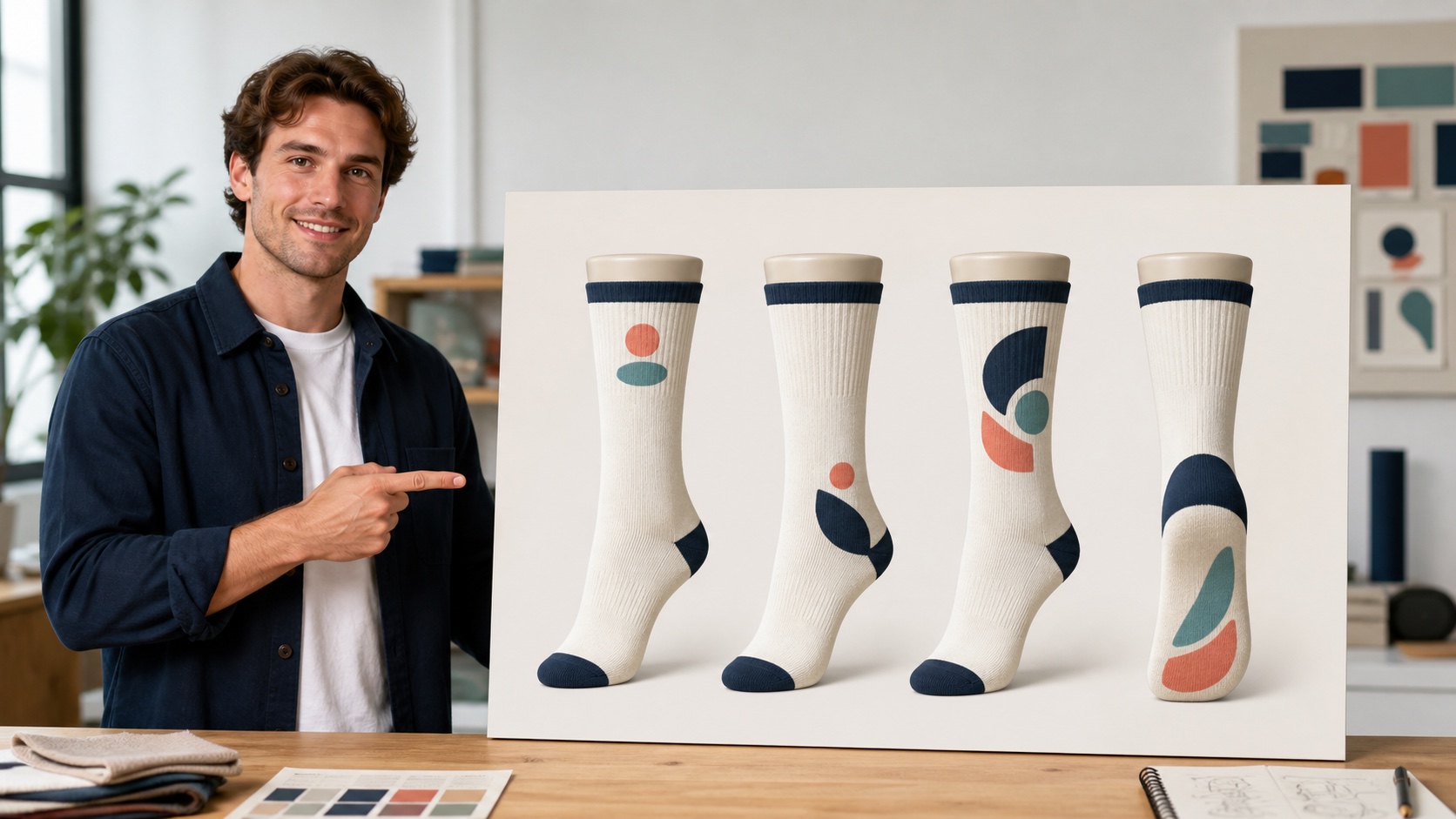
Jacquard knitting works well for bold logos, lettering, stripes and repeat motifs because the artwork becomes part of the knit. Digital or sublimation printing is better suited to photographs, gradients, illustrations and high color counts. Embroidery creates a raised mark on a stable area, while sole grip can carry a simplified studio or venue logo.
Artwork should be reviewed at the actual sock scale. Very thin lines, tiny lettering and complex color changes may need adjustment so the design stays clear when stretched and worn.
- Jacquard: durable knit-in graphics with controlled color counts
- Printing: detailed, photographic or all-over artwork
- Embroidery: textured logos on suitable stable zones
- Grip artwork: functional sole patterns and simplified marks
03Build material and construction around the wearing occasion
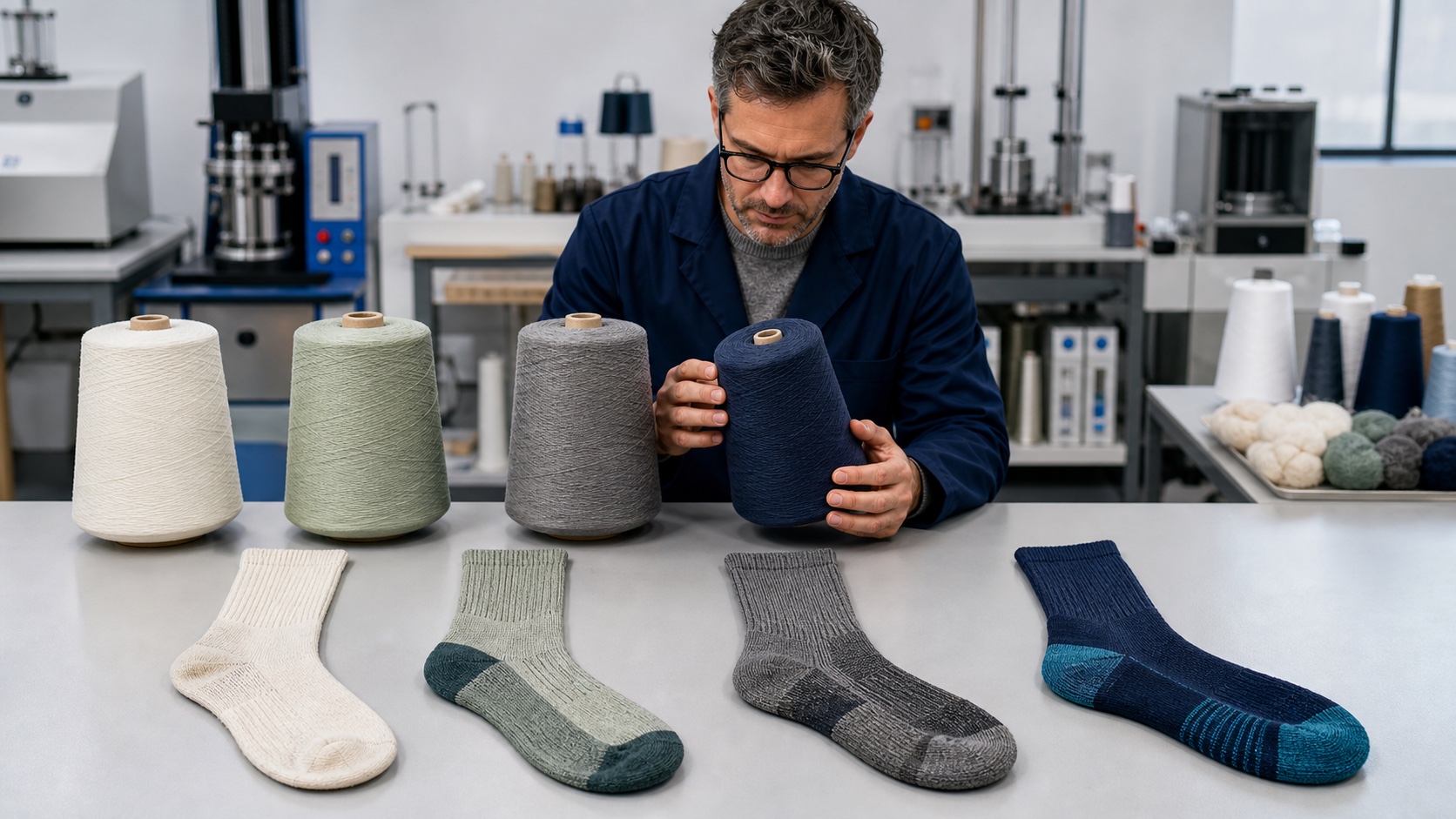
Material names alone do not define performance. A cotton, bamboo, wool or synthetic blend can feel different depending on yarn count, knit density, terry coverage, elastic distribution and reinforcement. The brief should describe the target wearer, climate, footwear, activity and desired hand feel.
Sport and outdoor socks may use zoned cushioning, mesh and durable synthetic yarns. Everyday and fashion socks may prioritize softness, color and design clarity. Compression, waterproof and healthcare-oriented products require more specific construction and testing requirements.
04Define sizes, fit and functional zones before sampling
Provide the required shoe-size conversion or body measurements instead of using a size name alone. The manufacturer can then review foot length, leg length, cuff opening, heel position and width grading for the intended market.
Functional zones should support the real use case. Examples include arch support, heel and forefoot cushioning, ventilation panels, stay-up cuffs, sole grip, reinforced heel and toe, wide-calf grading and graduated compression direction.
- Target wearer and regional size system
- Required sizes and planned quantity by size
- Sock height and finished measurements
- Footwear, activity and comfort requirements
- Fit trial and wash-recovery expectations
05Specify grip, bamboo, five-toe and yoga socks as distinct products
These product directions need more than a generic logo brief. Point-grip and non-slip socks require a defined silicone or PVC grip compound, dot or logo layout, coverage area and adhesion test. Bamboo-fiber socks need an agreed fiber blend, weight, reinforcement and accurate labeling rather than a vague softness claim.
Five-toe socks require individual toe-pocket proportions, smooth internal seams and size grading that keeps each pocket comfortable. Yoga and Pilates socks should define toe coverage, opening shape, arch support, heel construction and grip placement for the intended studio surface.
- Point-grip socks: dot shape, grip compound, sole coverage and wash adhesion
- Bamboo-fiber socks: blend, hand feel, weight, reinforcement and fiber labeling
- Five-toe socks: toe-pocket grading, seam comfort, stretch and optional sole grip
- Yoga socks: open- or closed-toe format, arch band, heel hold and studio branding
06Build soccer, equestrian, sock-sleeve and wool programs around real use
Custom soccer and football socks should coordinate with the match kit while fitting boots and shin guards. The brief should define club colors, logo or number placement, cuff recovery, foot cushioning, ventilation and youth-to-adult size grading. Football sock sleeves need their own length, opening measurements, stretch recovery and compatibility with the team sock or grip-sock system.
Equestrian socks typically use a thin, smooth leg inside tall riding boots with a more durable and comfortable foot. Wool and merino socks should specify fiber content, yarn weight, cushioning map, reinforcement, intended temperature range and care labeling for the target outdoor or premium-retail program.
- Soccer socks: kit colors, club logo, shin-guard fit, cushioning and player sizes
- Equestrian socks: low-bulk boot leg, reinforced foot, smooth toe and stable graphics
- Sock sleeves: length, opening tension, recovery, team colors and logo placement
- Wool socks: merino content, knit weight, cushion zones, reinforcement and care instructions
07Plan private-label packaging and product information together
Packaging options can include paper bands, hang cards, poly bags, reusable pouches, boxes, inserts and multipack formats. Confirm the folding direction, visible product area, hang-hole position, packed dimensions and how the size will be identified.
The sock, packaging and online listing should use consistent product names, size charts, fiber information and care wording. Buyers remain responsible for confirming labeling and product-claim requirements in the destination market.
08Send a quote-ready brief and approve one physical standard
For an accurate quotation, send the sock type, intended use, artwork, color references, material direction, size breakdown, quantity per design, packaging and delivery destination. MOQ and timing can then be reviewed against the actual specification rather than a generic product photo.
Before bulk production, approve the sample version, measurements, fit, colors, artwork placement, workmanship, functional features and packed presentation. Record approved changes so the same reference can guide production and repeat orders.
- Vector logo or high-resolution artwork
- Pantone, yarn-card or approved color references
- Quantity per design, color and size
- Packaging artwork and label information
- Required sample and delivery timing

 01
01