A custom sock sample is the physical reference that connects the buyer's brief to bulk production. Approval should mean more than “the sample looks good.” It should confirm the measurable, visual and functional details that the production team is expected to repeat.
Before approving a sample, compare it with the latest written specification, artwork and packaging files. Record any accepted variation or required correction. A clear approval trail reduces ambiguity when the bulk order is knitted, finished, paired and packed.
Use this checklist for fashion, sport, everyday, team and private-label socks. Technical products such as compression or waterproof socks may need additional buyer-defined testing.
Confirm the Sample Identity and Version
Start by verifying that everyone is reviewing the same item. Development projects often involve several rounds that look similar but contain different yarns, measurements or artwork revisions.
- Product name, style code and sample version
- Artwork file name or revision
- Colorway and approved color references
- Size represented by the sample
- Material and construction direction
- Packaging version, if included
Photograph the sample label and keep the approved version separate from rejected or superseded samples.
Measure the Sock Against the Specification
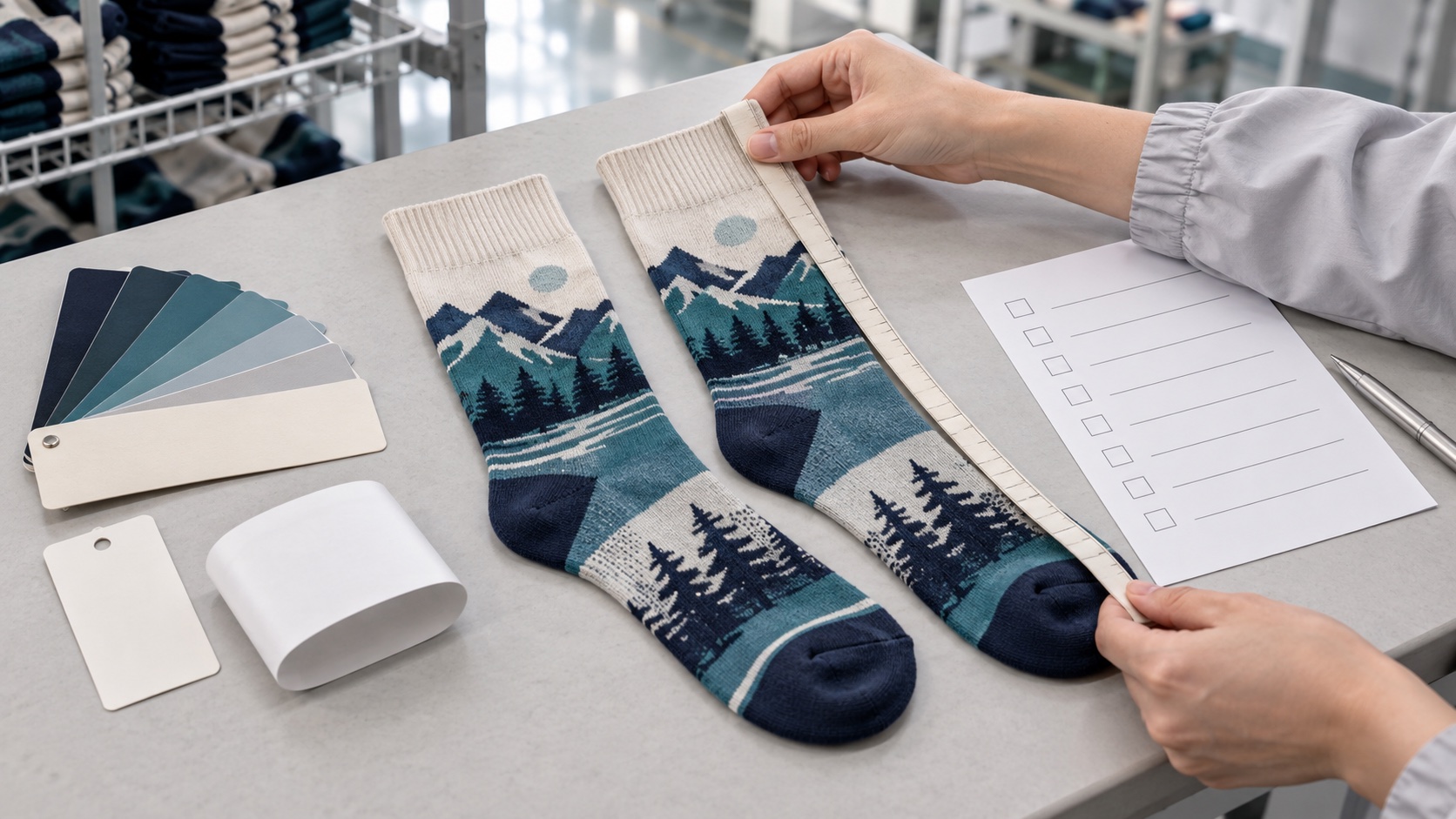
Lay the sock flat without stretching it and use the measurement method agreed with the manufacturer. Record the actual results rather than relying on visual judgment.
- Overall foot length
- Leg length from the heel reference
- Foot, ankle and leg width
- Cuff height and opening
- Heel pocket position
- Toe shape and seam position
- Product weight when it is a controlled specification
One sample cannot prove full size grading. Review how measurements will change across the required size range, especially for youth, wide-calf, compression and over-the-calf products.
Check Fit in the Intended Footwear
A flat measurement is only part of the review. Test the sample on an appropriate wearer and with the footwear or activity for which it was developed.
Check whether the heel remains in position, the toe seam lies comfortably, the cuff stays up and the sock avoids twisting or bunching. Sport and outdoor samples should be assessed with the intended boot or shoe because cushioning and material thickness change the available space.
For low-cut products, walk in the target footwear and check heel hold. For ski socks, confirm the relationship between mapped cushioning and boot fit. For wide-calf products, review both opening stretch and comfort over time.
Review Material, Construction and Hand Feel
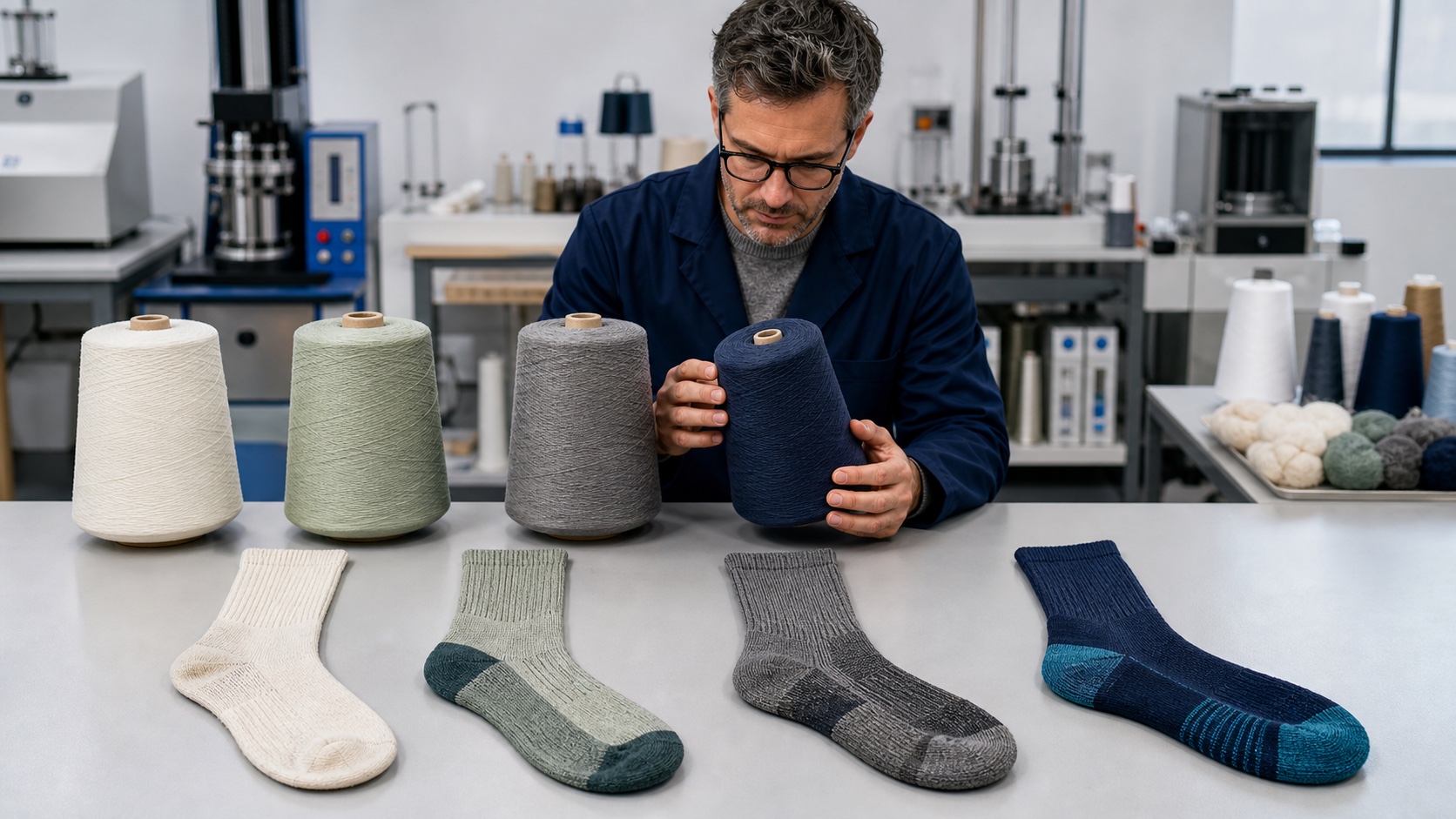
Confirm that the sample matches the agreed fiber direction and construction. A product can use the correct color and artwork while still feeling too thin, too firm or too bulky for the intended customer.
- Yarn blend and surface appearance
- Knit density and transparency when stretched
- Full, half or targeted terry coverage
- Mesh, rib, arch-support or compression zones
- Reinforcement at heel and toe
- Elastic recovery after dressing
- Inside floats, loose ends and next-to-skin comfort
If the construction is still being selected, compare options in the sock yarn and construction guide.
Approve Colors, Patterns and Logo Placement
Review color under consistent lighting and compare it with the agreed yarn card, printed standard or approved reference. Different fibers and surface textures can make the same color target appear different.
Stretch the sock to a realistic wearing width before judging artwork. Check:
- Logo dimensions and position
- Pattern scale, repeat and alignment
- Readable shapes and lettering
- Color order and contrast
- Left and right orientation
- Print crop, seam position or embroidery backing
Use the custom sock logo placement guide when the mark could move between the cuff, ankle, calf or sole.
Inspect Workmanship and Pair Consistency
Place both socks side by side. They should read as a pair, with consistent length, artwork position, cuff shape and finishing.
- No holes, dropped stitches or broken yarn
- No obvious stains, oil marks or unwanted color transfer
- Clean toe closing and comfortable seam
- Secure embroidery, labels and grip elements
- Trimmed loose threads and controlled inside floats
- Consistent logo height and pattern placement between the pair
- Correct pairing, folding and size identification
Discuss which characteristics are critical and what production tolerance will be used. Handmade judgment calls should not replace an agreed inspection standard.
Verify Function and Product Claims
A sample's appearance does not verify every performance claim. Define the test method and acceptance requirement that match the intended market and product.
- Grip placement, adhesion and wash durability
- Compression pressure and size grading
- Waterproof construction and agreed test method
- Shrinkage, colorfastness and stretch recovery
- Abrasion or pilling direction
- Care-label accuracy
Compression and healthcare-related language requires particular care. Product development information is not personal medical advice, and claims should be reviewed for the intended market.
Approve Packaging, Labels and Retail Presentation
Request a packed sample when packaging is part of the order. Confirm how the sock is folded, what the customer sees first and whether the pack protects the product through shipping and handling.
- Correct brand artwork and packaging revision
- Product name, size, color and pair count
- Fiber, care and country-of-origin information
- Barcode, SKU and marketplace labels
- Hang-hole, band, pouch or box dimensions
- Multipack assortment and presentation
- Carton quantity, marks and shipping preparation
See the private-label socks page for common retail packaging directions.
Record the Final Approval
Approval should create a usable production reference. Keep the signed or clearly confirmed specification together with dated photos, measurement results, artwork files and packaging files. Identify the physical sample that will serve as the approved reference.
If corrections are required, list them by item and request a revised sample or documented confirmation as appropriate. Avoid approving with vague comments such as “make it a little better.” State the expected measurement, position, color reference or construction change.
The OEM sock manufacturing workflow explains how the approved sample connects to bulk production, quality checking and packing.
Frequently Asked Questions
Should a buyer approve a photo or a physical sock sample?
Photos can confirm visible details, but they do not fully show fit, hand feel, inside construction, measurements or packaging behavior. Use a physical sample when those points are important to approval.
Can one sample represent every size?
No single sample proves the complete size range. Review the grading plan and request additional size samples when fit risk, calf range or market requirements justify them.
What if the sample is acceptable but not perfect?
Record every accepted variation and required correction in writing. The production team needs a specific reference, not an assumption about what the buyer intended.
Should packaging be approved separately?
Packaging files and structure should be approved, and a packed sample is valuable when folding, visibility, labeling or fulfillment requirements matter.
Is sample approval the same as bulk inspection?
No. Sample approval defines the production reference. Bulk inspection checks whether manufactured goods follow that reference and the agreed tolerance, quantity and packing requirements.