No-show socks are supposed to disappear inside the shoe, not slide under the heel. When a pair will not stay in place, the cause is usually a mismatch between sock cut, foot size, shoe shape or heel-grip condition. Choosing the right profile for the shoe is more reliable than looking for the lowest possible edge.
Use these checks to find invisible socks that remain comfortable throughout the day.
Match the Cut to the Shoe
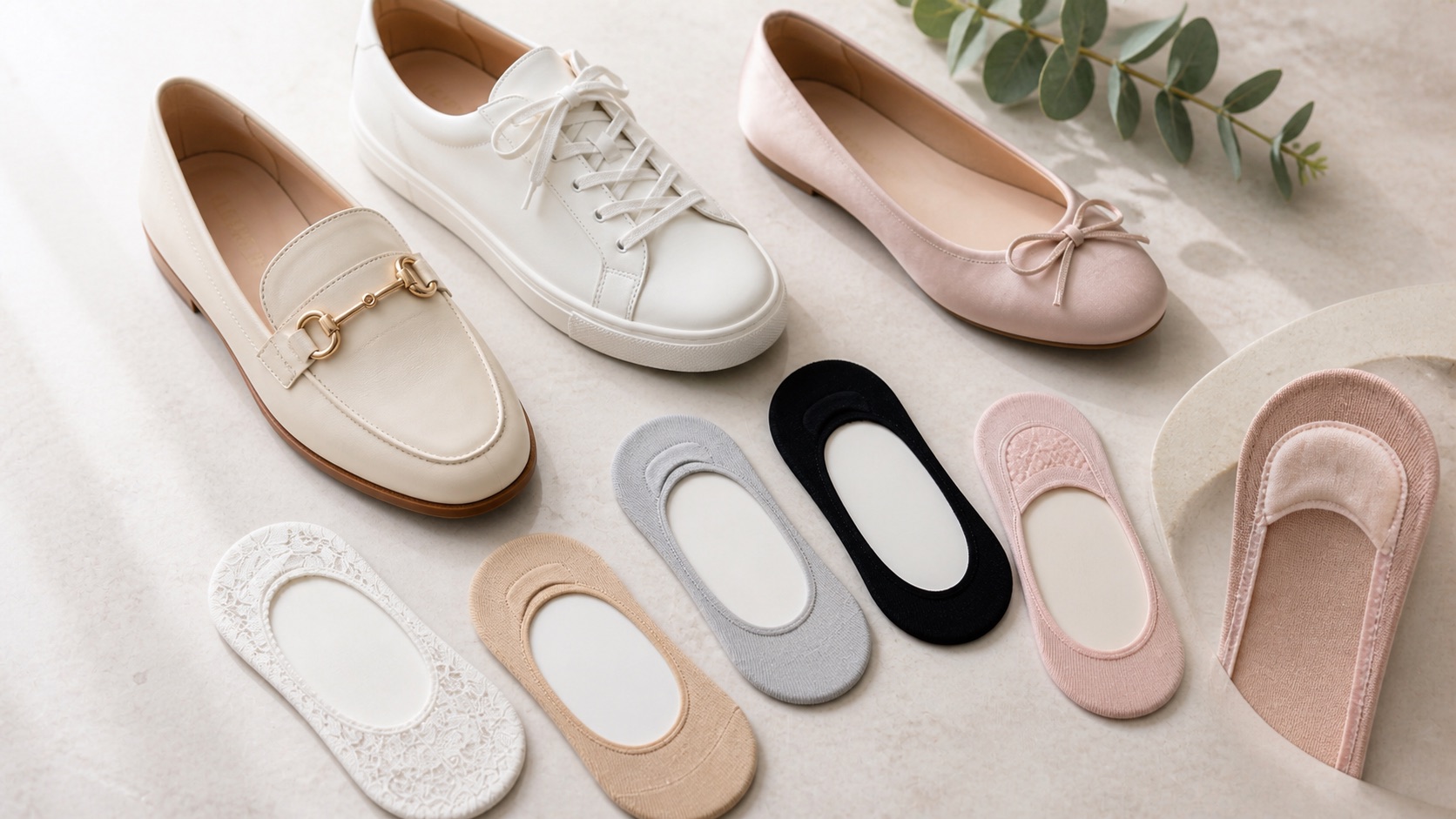
“No-show” covers several different shapes. A loafer liner sits lower across the top of the foot than a sneaker liner. A ballet flat may require an even narrower opening, while a high-vamp sneaker can hide a more secure, higher-cut sock.
Choose the highest sock that remains invisible in the intended shoe. More fabric around the heel and top of the foot generally gives the design more structure and holding power.
Get the Foot Length Right
A sock that is too large leaves extra fabric and weakens tension around the heel. A sock that is too small can be pulled forward by the toes, gradually peeling away from the back of the foot. Check the maker's size range and, when possible, use actual foot length.
The heel pocket should line up with the natural curve of the heel. If it sits under the foot before the shoe is even on, try another size or shape.
Check the Heel Grip
Many no-show socks use silicone strips or dots inside the heel. They work best when they sit flat against clean, dry skin. Lotion, lint and wear can reduce contact. The grip should feel smooth, not sharp, and should not be relied on to correct a poorly sized sock.
People with skin sensitivities should check the grip material and test it for a short period. Stop wearing the pair if irritation appears.
Look for a Shaped Heel and Secure Opening
A deeper, knitted heel pocket follows the foot better than a flat fabric shape. Elastic around the opening should distribute tension without cutting into the top of the foot. Some designs add an elastic band through the arch to keep the fabric from moving forward.
Avoid thick seams along the opening where the shoe presses against the foot.
Choose the Right Fabric Weight
Thin liners fit dress shoes and loafers with limited space. Cotton-rich knits offer a familiar feel for casual shoes. Synthetic performance blends may dry faster for active use. A small amount of elastane helps the sock recover after stretching.
For sneakers, light cushioning under the heel and forefoot can improve comfort if the shoe has enough room. For fitted flats, a smooth single-layer design is usually easier to hide.
Why No-Show Socks Slip
Common causes include:
- The sock is too large or too small.
- The cut is too low for the shoe.
- The shoe collar catches the edge with each step.
- Heel grips are dusty, oily or worn.
- The sock has lost elasticity.
- The left and right heel shapes are not aligned.
Try the socks in the intended shoes at home before a long day. If the shoe itself moves excessively at the heel, address shoe fit rather than expecting the sock to solve it.
Washing No-Show Socks With Silicone Grips
Follow the label, use mild detergent and avoid high heat unless allowed. Keep the silicone free from fabric-softener residue. Place small liners in a mesh bag so they do not become trapped inside other laundry, and dry them fully before pairing.
For more detail, our grip sock care guide covers the same principles.
Frequently Asked Questions
Should no-show socks cover the top of the foot?
Coverage depends on the shoe. Choose enough fabric to stay secure while remaining below the visible shoe opening.
Are no-show socks suitable for running?
Only if they are designed for running, fit securely and rise above rubbing points. Many runners prefer an ankle tab or quarter height for more dependable heel coverage.
When should I replace heel-grip socks?
Replace them when the grip peels, the opening loses recovery, the heel slips consistently or the fabric becomes thin.
Explore no-show socks for sneakers, loafers and low-profile everyday shoes.