Grip socks need slightly different care from basic everyday socks. The fabric must be cleaned, but the stretch fibers and non-slip tread also need protection. Excessive heat, harsh products and rough drying can shorten the useful life of a pair.
The care label on your socks always comes first. When it permits regular machine washing, the steps below provide a sensible routine.
Quick Grip Sock Washing Routine
- Check the care label and inspect the tread.
- Separate light and dark colors.
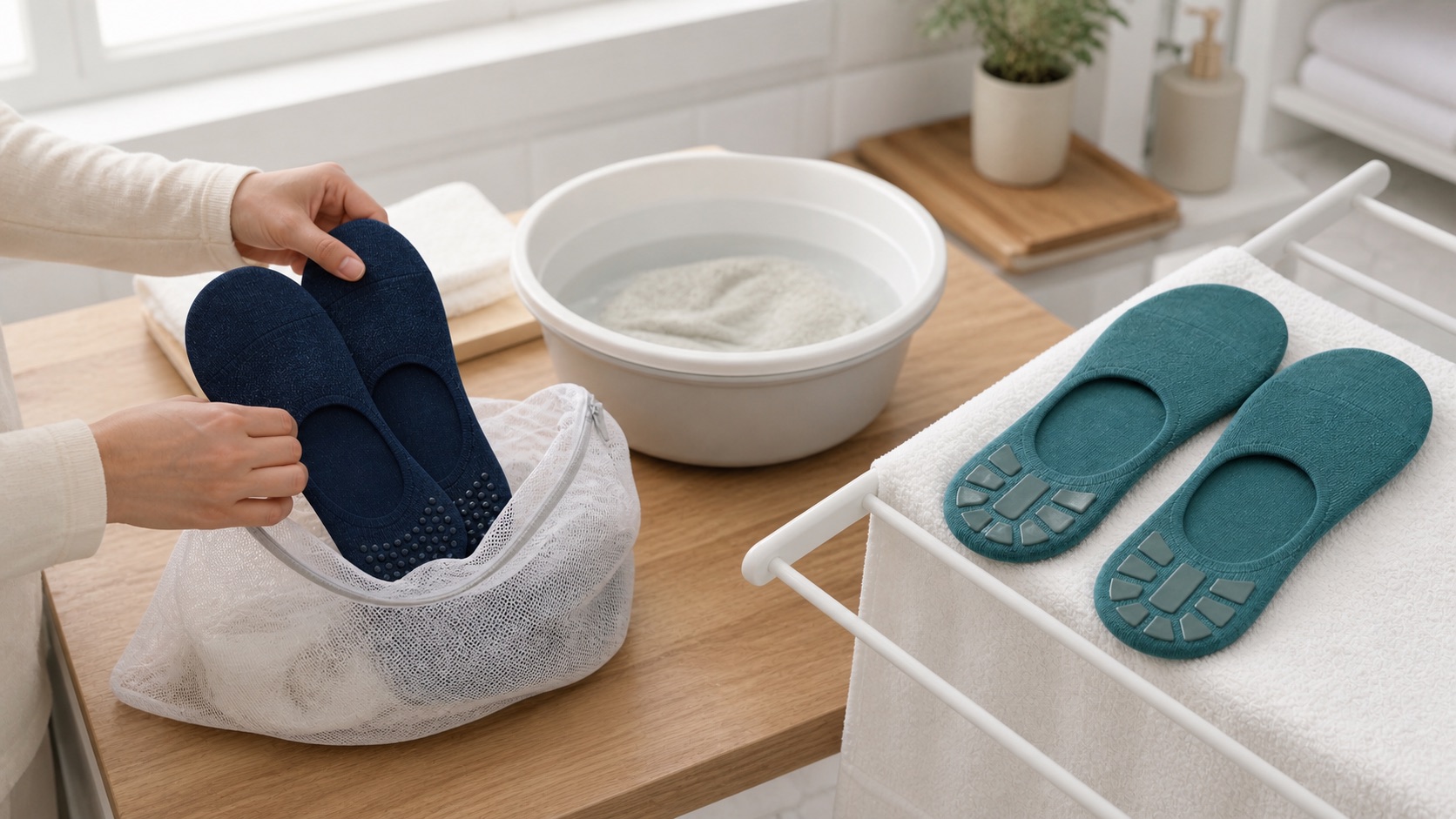
- Turn the socks inside out unless the label says otherwise.
- Place delicate pairs in a mesh laundry bag.
- Wash on a cool or warm gentle cycle with mild detergent.
- Air dry flat or use only the low-heat setting allowed by the label.
- Let the grips dry completely before wearing.
This routine is appropriate for many cotton, polyester and acrylic blends, but exact temperatures vary by product.
Why Heat Matters
Grip elements are commonly made from flexible polymer materials, while the sock often contains elastane. High heat can affect flexibility, adhesion and stretch. A hot wash or dryer may not ruin a pair immediately, but repeated exposure can speed up cracking, peeling or loss of shape.
Air drying is the cautious option. If tumble drying is permitted, choose the lowest suitable setting and remove the socks when dry rather than leaving them in a hot drum.
Should Grip Socks Be Washed Inside Out?
Turning socks inside out exposes the areas that touch the skin to detergent and water. It may also reduce direct friction between tread elements and the washing drum. A mesh bag adds another layer of protection and keeps small pairs together.
However, visible dirt on the grip surface still needs attention. Brush away dry debris gently before washing. Do not scrape the tread with a sharp object.
Use a Mild Detergent
A standard mild detergent is sufficient for normal wear. Avoid using more than the product instructions recommend, because residue can remain on the fibers. Bleach and stain treatments may discolor fabric or affect components, so use them only when the sock label explicitly allows it.
Fabric softener can leave a coating on some textiles and grip surfaces. If traction is important, it is usually safer to skip it unless the manufacturer recommends otherwise.
How Often Should You Wash Non-Slip Socks?
Wash socks after normal wear, especially when feet have perspired. Studio grip socks used for yoga or Pilates are commonly washed after each session. Floor socks worn briefly at home may follow a different schedule, but the sole should stay free of dust, hair and oils because debris can reduce contact with the floor.
Keep enough pairs in rotation so each can dry fully before it is worn again.
Remove Odor Without Harming the Grips
Start with prompt washing and complete drying. Do not leave damp socks compressed in a gym bag or laundry basket. If odor remains, repeat a gentle wash rather than masking it with heavy fragrance.
Before trying vinegar, disinfectants or specialist additives, check both the care label and the additive instructions. Materials vary, and an unapproved treatment may damage color, elastic or printed tread.
When to Replace Grip Socks
Care can extend useful life, but it cannot restore worn tread. Replace a pair when:
- Grips are peeling, cracking or missing from key contact zones.
- The sock twists and no longer stays aligned under the foot.
- The heel or toe has thinned significantly.
- Elastic no longer holds the sock securely.
- The inside has rough areas that cause discomfort.
For buying advice, see our complete guide to grip socks for home.
Frequently Asked Questions
Can I hand-wash grip socks?
Yes, if the label permits it. Use mild detergent, avoid aggressive scrubbing and press out water gently without twisting the socks.
Can silicone grip socks be ironed?
Do not iron the tread. Direct heat can damage grip materials. Follow the label for any garment-specific instructions.
Why do my grip socks feel less grippy?
Dust, lint, skin oils, wear or product residue can reduce traction. Clean and dry them according to the label. If the tread is physically worn, replace the pair.
Looking for an easy-care replacement? Compare materials and sole patterns in our non-slip floor sock collection.