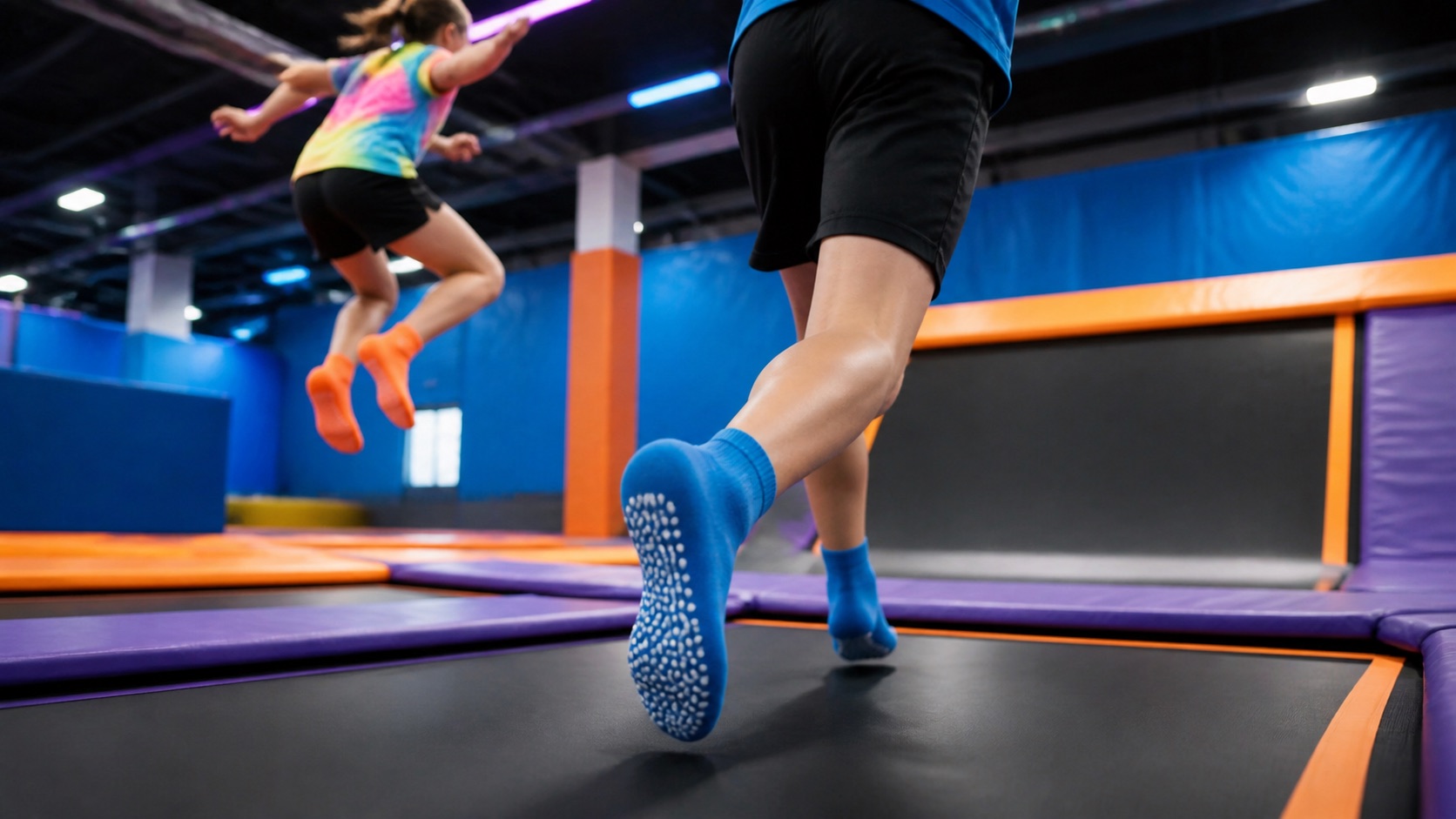
Trampoline grip socks are used by many indoor activity parks to add traction, support hygiene procedures and make participants easy to identify. They are not safety equipment on their own and cannot prevent every slip or injury. Park rules, supervision, equipment maintenance and responsible jumping remain essential.
Whether buying one pair or ordering thousands for a venue, compare fit and finished-sock performance rather than grip artwork alone.
Follow the Facility's Rules First
Some trampoline parks require their own branded socks; others accept compatible grip socks. Ask before arriving, because a technically similar pair may not meet the venue's policy. Home trampoline owners should follow the equipment maker's instructions and supervise use appropriately.
Grip socks should be worn only in the intended environment. Damaged, wet or dirty tread may behave differently.
Look for Full Contact-Zone Coverage
Grip elements should cover the heel, forefoot and toes so traction remains available as the foot changes position. A flexible dot, wave or geometric pattern should move with the knit. Large rigid patches can feel uncomfortable or prevent the fabric from flexing naturally.
Inspect adhesion around the edges and stretch the sock gently. Any visible cracking or peeling is a reason to replace the pair.
Secure Fit Keeps Tread in Position
The heel must sit correctly and the sock should not rotate. An elastic arch, shaped heel and stable ankle cuff can improve alignment. Overly large socks may twist, while undersized socks may distort the tread and compress the toes.
Children's ranges need accurate size steps. Age-only labels are convenient but less reliable than foot or shoe measurements; see our kids' sock size guide.
Ankle vs. Crew Trampoline Socks
Ankle socks are common because they are cool and easy to distribute. Crew socks provide more space for branding and may suit cool venues. The top should stay secure without a harsh elastic edge.
Choose bright, distinct colors if the venue uses socks to identify sessions, zones or membership levels.
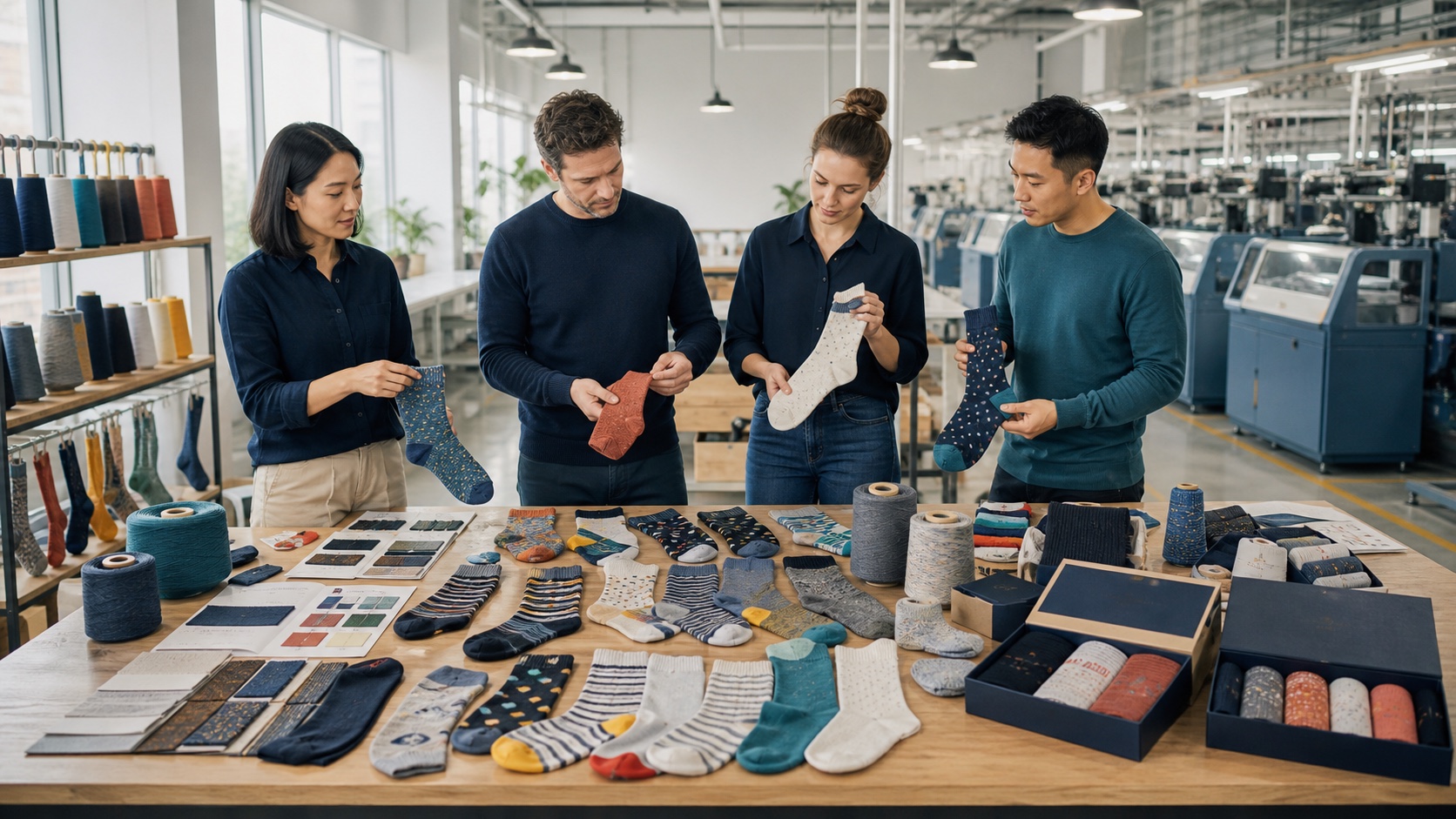
Planning a Custom Park Order
A venue order should define:
- Quantity and size breakdown
- Base color and grip color
- Knitted, printed or grip-sole logo placement
- Individual or bulk packaging
- Barcode and waiver messaging requirements
- Reorder lead time
- Finished-product testing and quality criteria
Keep critical grip coverage ahead of decorative design. A logo formed in the tread should not leave large blank contact zones.
Hygiene and Care
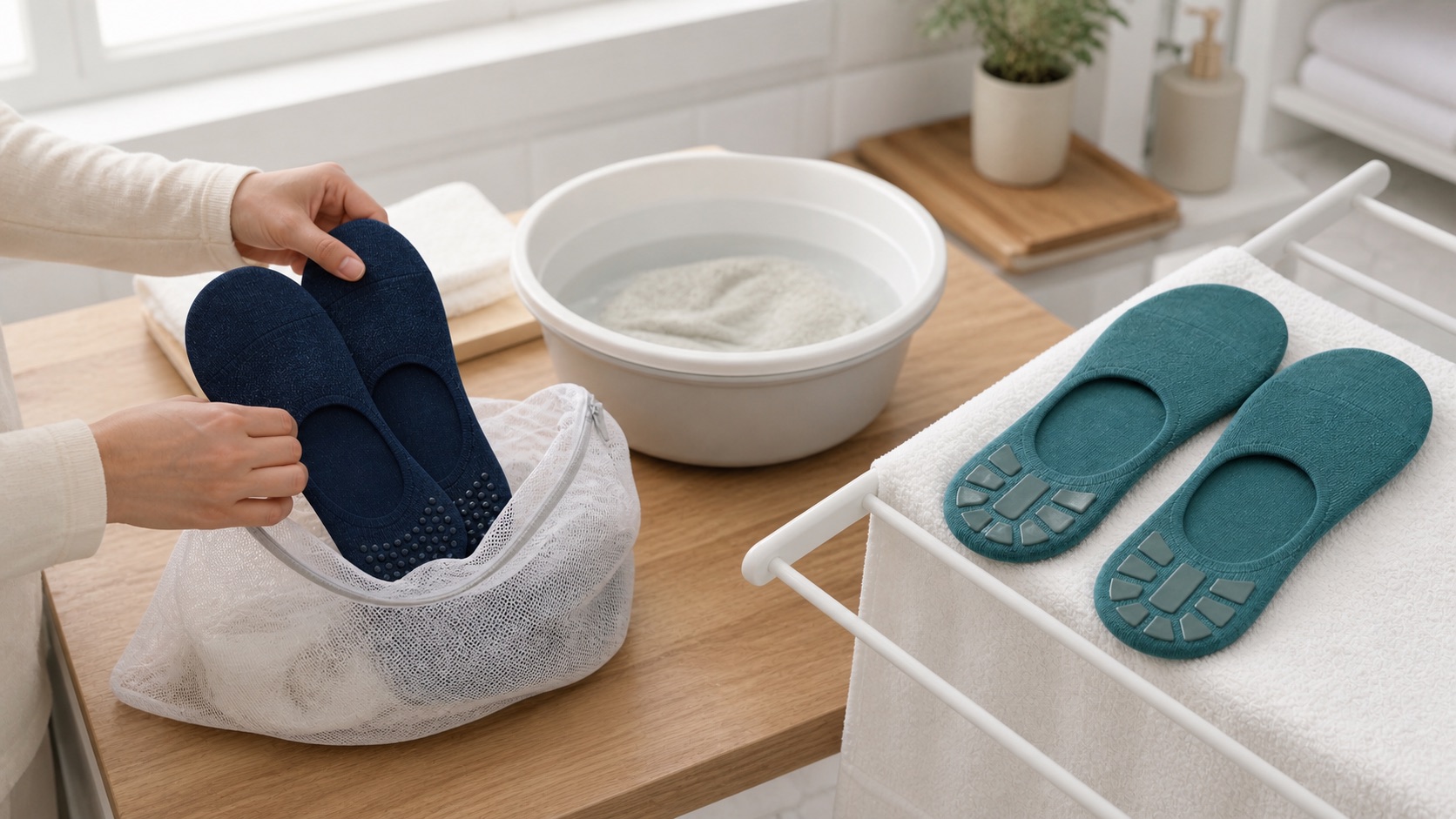
Most facilities sell or issue a personal pair rather than sharing socks. Follow the park's policy. At home, wash after use according to the label, use mild detergent and avoid high heat that could affect grips or elastane. Dry fully before returning the pair to a gym bag.
For detailed washing instructions, read how to wash grip socks.
When to Replace Trampoline Socks
Replace a pair if the tread peels, the sock rotates, the fabric has a hole or the cuff no longer stays up. Grip performance can also be reduced by dust, oil or lint. Cleaning may restore surface contact, but worn material cannot be repaired by washing.
Frequently Asked Questions
Do all trampoline parks require grip socks?
Policies vary. Check the specific venue before visiting; some require a park-issued pair.
Can ordinary floor socks be used for trampolining?
Only if the facility permits them and the product is suitable for that use. A park may specify its own construction or branding.
Can trampoline socks prevent falls?
No sock can guarantee that. They may add traction, but safe behavior, rules, supervision and maintained equipment are still necessary.
Explore our trampoline grip socks for individual pairs and custom park programs.