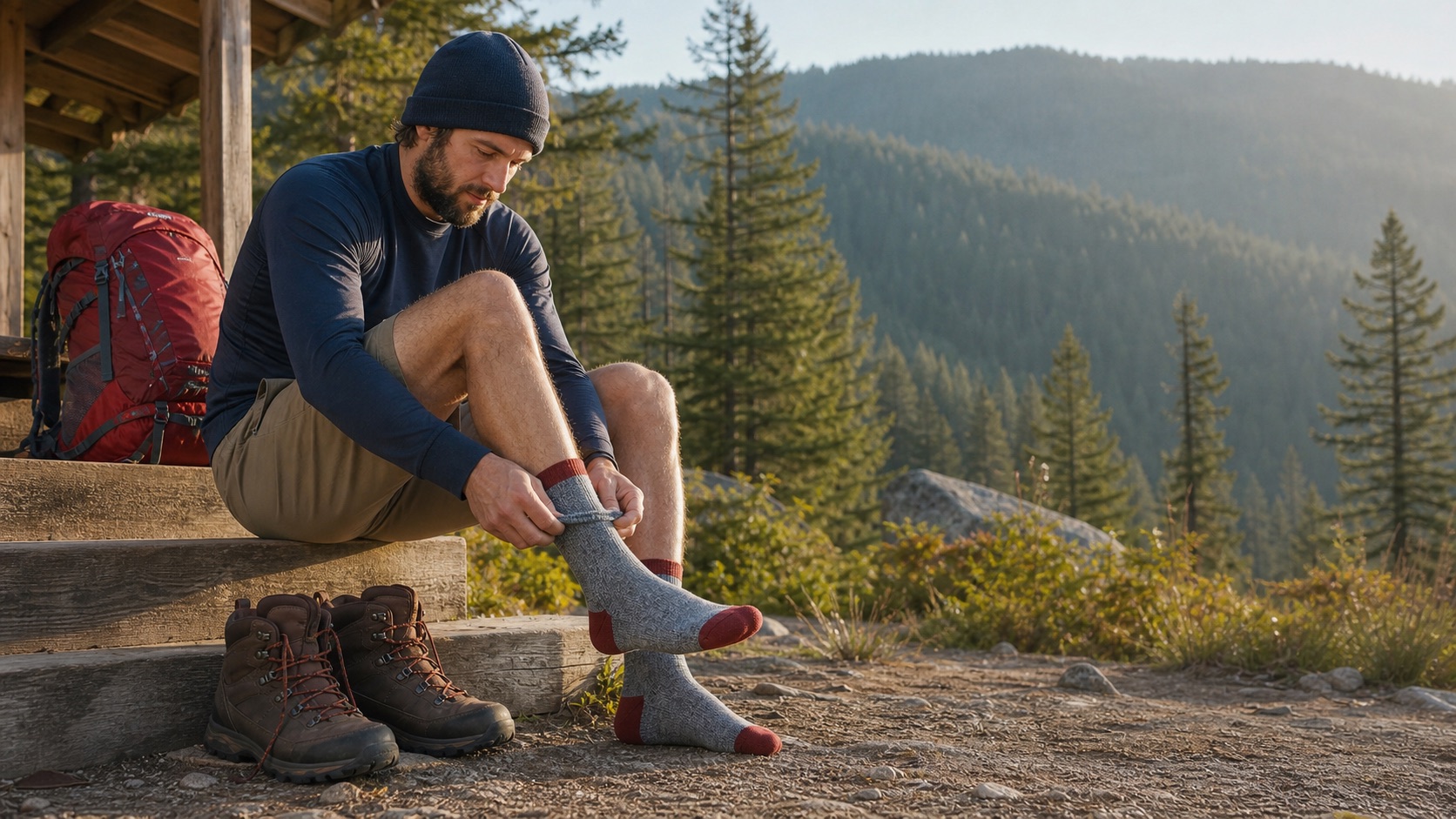
Hiking socks help manage the contact between the foot and hiking footwear over thousands of steps. A good pair fits without wrinkles, rises above the boot collar and balances moisture, cushioning and temperature for the route. The thickest or most expensive option is not automatically the best; compatibility with the boot matters first.
Use this guide for short day hikes, regular walking or multi-day backpacking.
Match Sock Height to Footwear
The sock should cover every area where the boot or shoe contacts the leg.
- Ankle or quarter height: low trail shoes in warm conditions
- Crew height: versatile coverage for mid-cut footwear
- Boot or over-the-calf height: taller boots, colder conditions or more leg coverage
A cuff that sits directly beneath a firm boot edge can rub. Choose a slightly taller sock rather than relying on a low style that slips.
Get a Close, Wrinkle-Free Fit
The heel pocket should align with the heel and the toe seam should lie flat. Extra length can fold beneath the toes, while a small sock can pull tightly across them. Try both feet because foot size is often not perfectly identical.
Walk on an incline if possible. Check whether the heel moves inside the sock and whether the sock moves inside the boot. A sock cannot fully correct footwear that is the wrong size or shape.
Pick the Right Cushioning
Light cushioning reduces volume and suits close-fitting trail shoes. Medium cushioning offers a versatile footbed for many hiking boots. Heavy cushioning may suit cold conditions or roomy footwear, but it can make a fitted boot too tight.
Targeted terry under the heel and forefoot adds comfort without insulating the entire foot. A thinner instep can create space and improve drying.
Compare Hiking Sock Materials
Merino wool blends are popular for temperature versatility, softness and odor resistance on repeated days. Synthetic fibers such as polyester and nylon can improve drying, shape retention and abrasion resistance. Elastane keeps the knit aligned.
Cotton-rich socks may hold moisture during strenuous or wet hikes and can feel slow to dry. For longer routes, choose a blend designed for hiking rather than a casual cotton crew.
Read our sports sock material comparison for a closer look at fibers.
Consider Weather and Trail Length
Warm-weather hikers often prefer lighter yarns, ventilated zones and a spare dry pair. Cold-weather hikers need enough insulation without restricting the boot. In rain or stream crossings, drying speed becomes especially important.
For multi-day trips, plan how socks will be rotated, washed and dried. Pack at least one dry pair protected from rain. Change out of wet socks when conditions permit and inspect the feet for irritation.
Liner Socks: Useful or Unnecessary?
A thin liner under a hiking sock can create a two-layer system, but it also adds volume. Some hikers like the moisture and friction management; others prefer a single anatomically fitted sock. Test the complete combination before a long trip.
Never assume that two thick pairs create better blister protection. Wrinkles and tight boots can make matters worse.
Hiking Sock Care
Wash according to the blend. Wool-rich styles may require gentle cycles and low heat. Synthetic styles may dry faster but still contain heat-sensitive elastane. Turn socks inside out to clean the terry loops and let pairs dry completely before storage.
Replace socks when cushioning is compressed, the heel thins, the cuff slips or rough areas develop.
Frequently Asked Questions
Are wool socks best for hiking?
Merino blends are a strong option, but fit, construction and conditions matter. A suitable synthetic hiking sock may be the better choice for fast drying or wool-free preferences.
How many pairs should I pack?
That depends on route length, weather and drying opportunities. Always protect at least one clean, dry pair for camp or emergencies.
Should hiking socks be tight?
They should be snug enough to remain smooth, not tight enough to compress the toes or leave painful marks.
Compare heights, cushioning and fiber blends in our hiking sock collection.