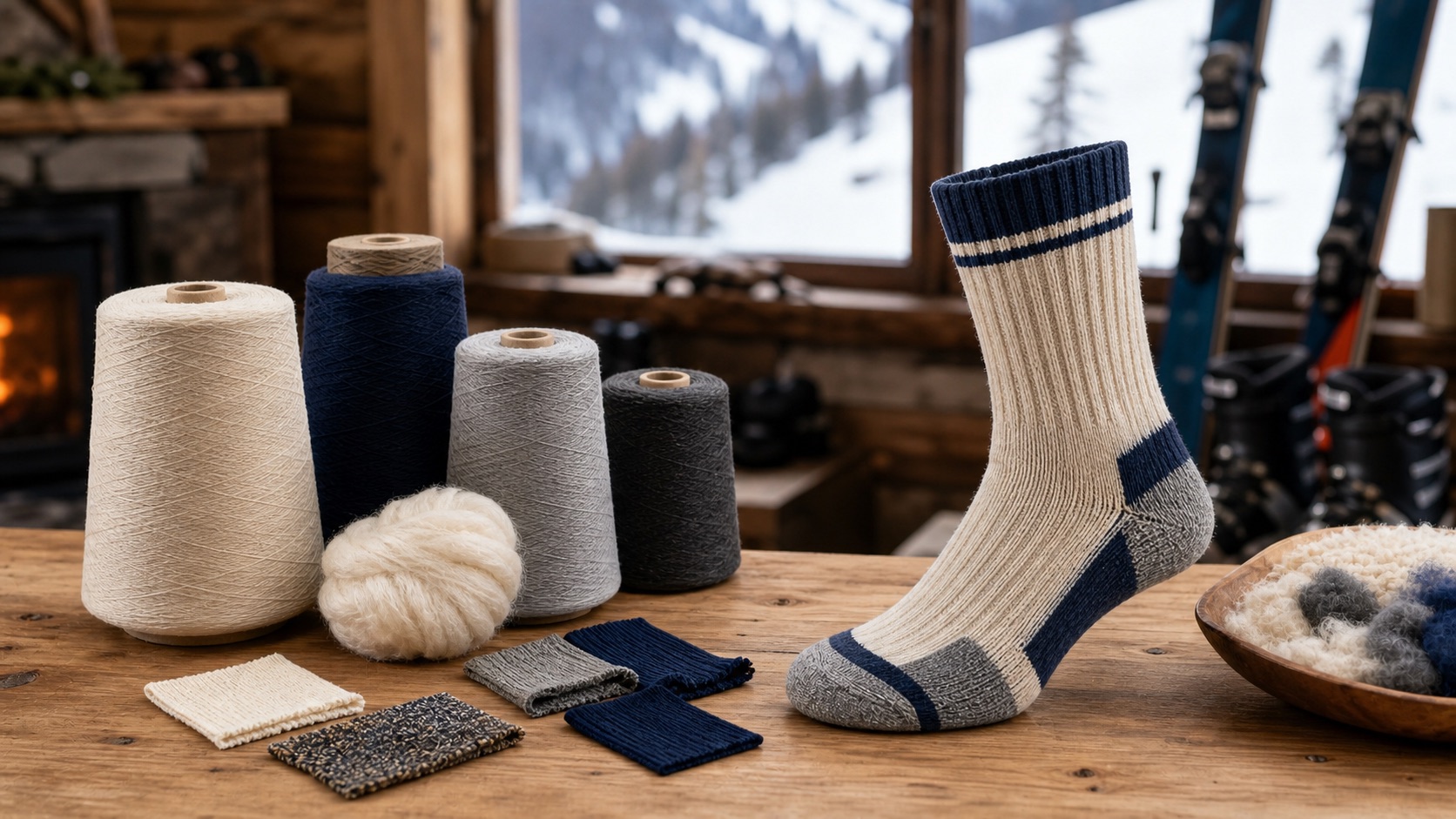
Ski sock materials affect much more than how a pair feels in the hand. Fibers influence moisture management, drying time, durability, warmth and washing requirements. Because most ski socks combine several fibers, the best choice is usually a well-designed blend that matches the skier's priorities.
Here is how the most common options compare.
Merino Wool Ski Socks
Merino wool is widely used in outdoor socks because its fine fibers can feel soft and help keep feet comfortable across changing temperatures. It can absorb moisture vapor and remains comfortable in a range of conditions. Many people also value its natural odor resistance during multi-day travel.
Pure wool is rarely the only fiber in a performance ski sock. Nylon may be added to improve abrasion resistance, while elastane helps the sock retain its shape.
Best for: skiers who value temperature regulation, a natural-fiber feel and multi-day versatility.
Consider: wool content, washing instructions and any personal sensitivity to wool. A higher percentage is not automatically better if the overall construction does not fit well.
Synthetic Ski Socks
Synthetic designs commonly use polyester, nylon, polypropylene or a combination. These materials can dry quickly, hold their shape and withstand repeated wear. Engineers can place different yarns in separate zones, creating a durable heel, a breathable instep and a stretchy arch in one sock.
Best for: frequent washing, dependable shape retention, wool-free preferences and high-output skiing.
Consider: softness, odor control and the exact knit structure. “Synthetic” describes a broad group, so two pairs with similar labels may feel very different.
Acrylic Ski Socks
Acrylic yarn can provide softness, loft and a wool-like hand feel without using animal fiber. It is often blended with nylon and elastane to improve durability and fit. Acrylic can be a practical option for value-focused ranges or for customers who prefer wool-free socks.
Best for: soft warmth, easy-care collections and wool-free product lines.
Consider: moisture management and knit density. A bulky acrylic sock may occupy more boot volume than a thin technical blend.
Why Blends Are So Common
A sock has several jobs at once. It must stay in place, tolerate friction, handle moisture and remain comfortable under pressure. One fiber rarely excels at every task, which is why the percentage label should be read as a recipe rather than a quality score.
A typical blend might use a comfort fiber through the body, nylon in high-wear zones and a small percentage of elastane for stretch. The knitting method and yarn placement can matter as much as the percentages.
Material Comparison at a Glance
| Material | Main strengths | Points to check |
|---|---|---|
| Merino wool blend | Temperature versatility, soft feel, odor resistance | Care instructions, wool sensitivity, price |
| Polyester or nylon blend | Quick drying, durability, consistent fit | Feel against skin, odor management |
| Acrylic blend | Soft loft, wool-free warmth, easy care | Bulk, moisture performance, long-term pilling |
The table is a starting point, not a ranking. A good synthetic sock can outperform a poorly fitted wool sock, and a thoughtful acrylic blend can be more comfortable than either for a particular customer.
Match the Blend to the Boot
Boot volume changes the material decision. A low-volume performance boot often works best with a fine-gauge, light-cushion sock. A roomier recreational boot may accommodate a loftier knit. If toes feel compressed, changing to a thinner sock is usually more useful than searching for a warmer fiber.
For fit and cushioning advice, see how to choose the best ski socks.
Read the Care Label Before Buying
Ski socks last longer when the care routine suits the fiber blend. Many wool blends require a gentle, cool wash and low heat. Some synthetics tolerate regular washing but still benefit from air drying. High dryer temperatures can weaken stretch fibers over time.
If you are buying for a family, rental operation or team, easy and repeatable care may be as important as fiber choice.
Frequently Asked Questions
Is merino wool always the warmest ski sock material?
No. Warmth also depends on yarn weight, knit construction, fit, boot insulation and circulation. Merino is valued for temperature regulation, but the whole system matters.
Are synthetic ski socks suitable for sensitive skin?
They can be, although comfort varies by yarn and individual. Look for a smooth interior, flat toe seam and a fit that does not rub.
Can acrylic be used for performance ski socks?
Yes, particularly in blended yarns. Evaluate thickness, moisture handling, durability and fit rather than judging the fiber name alone.
Compare the materials, cushioning and heights in our ski socks range to find a combination that works with your boots.