The best ski socks are not necessarily the thickest pair in the drawer. A good ski sock fits close to the foot, reaches above the boot cuff, manages moisture and places cushioning where a skier needs it. The right combination helps the ski boot fit consistently and reduces the folds, pressure points and dampness that can make a long day uncomfortable.
Use this guide to compare ski socks for resort skiing, lessons or regular winter trips.
Start With the Fit Inside the Boot
A ski sock should feel snug without squeezing the toes or leaving deep marks around the calf. Extra fabric can bunch inside a closely fitted boot, while a loose heel can slide and rub.
Check these four areas when trying on a pair:
- The heel pocket sits directly around the heel.
- The toe seam lies flat and does not press against a toe.
- The cuff stays above the top of the ski boot.
- The fabric remains smooth when the boot is buckled.
Choose the sock size from the maker's size chart rather than assuming that one size fits every foot. If you are between sizes, the foot length and calf fit are usually more useful than everyday shoe labels.
Choose Cushioning for Your Boots and Skiing Style
Light-cushion ski socks work well in close-fitting boots and for skiers who prefer a more direct feel. Medium cushioning adds softness under the foot, around the shin or at the ankle. Heavily cushioned socks may suit roomy recreational boots, but they can also make a precise boot feel too tight.
More padding does not automatically create more warmth. If thick socks restrict circulation or crowd the toes, feet may feel colder. Start with the way the boot fits, then choose only the cushioning the foot and shin need.
Compare Ski Sock Materials
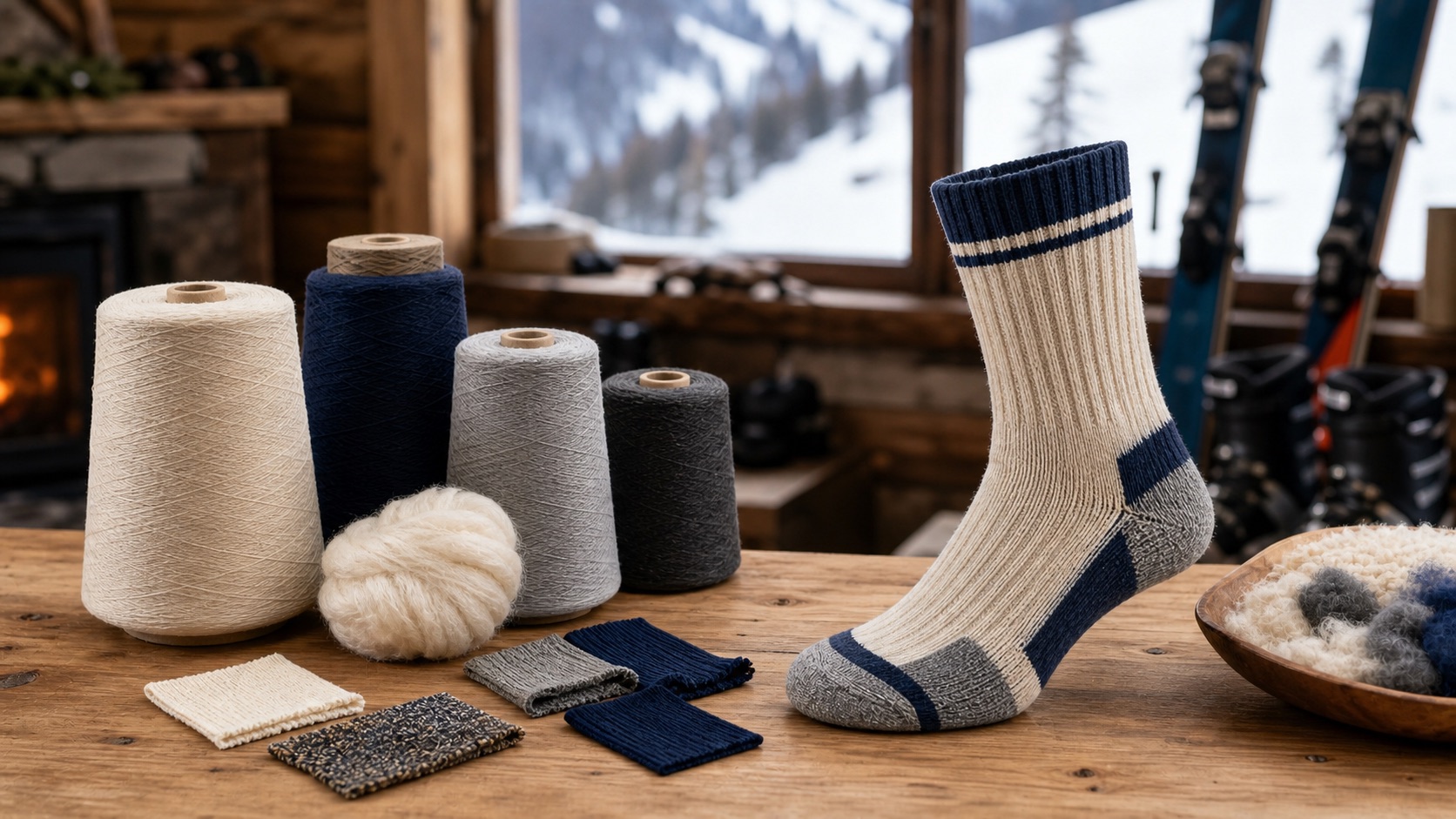
Most performance ski socks use a blend rather than a single fiber. Each component has a job:
- Merino wool blends are popular for softness, temperature regulation and comfort across changing conditions.
- Synthetic fibers such as nylon or polyester can improve durability, shape retention and moisture movement.
- Acrylic blends can provide a soft, warm feel and are useful in wool-free designs.
- Elastane or spandex helps the sock stay close to the arch, ankle and calf.
The blend alone does not tell the whole story. Knit density, ventilation zones, padding placement and fit all affect how the sock performs. For a deeper comparison, read our ski sock materials guide.
Pick the Correct Height
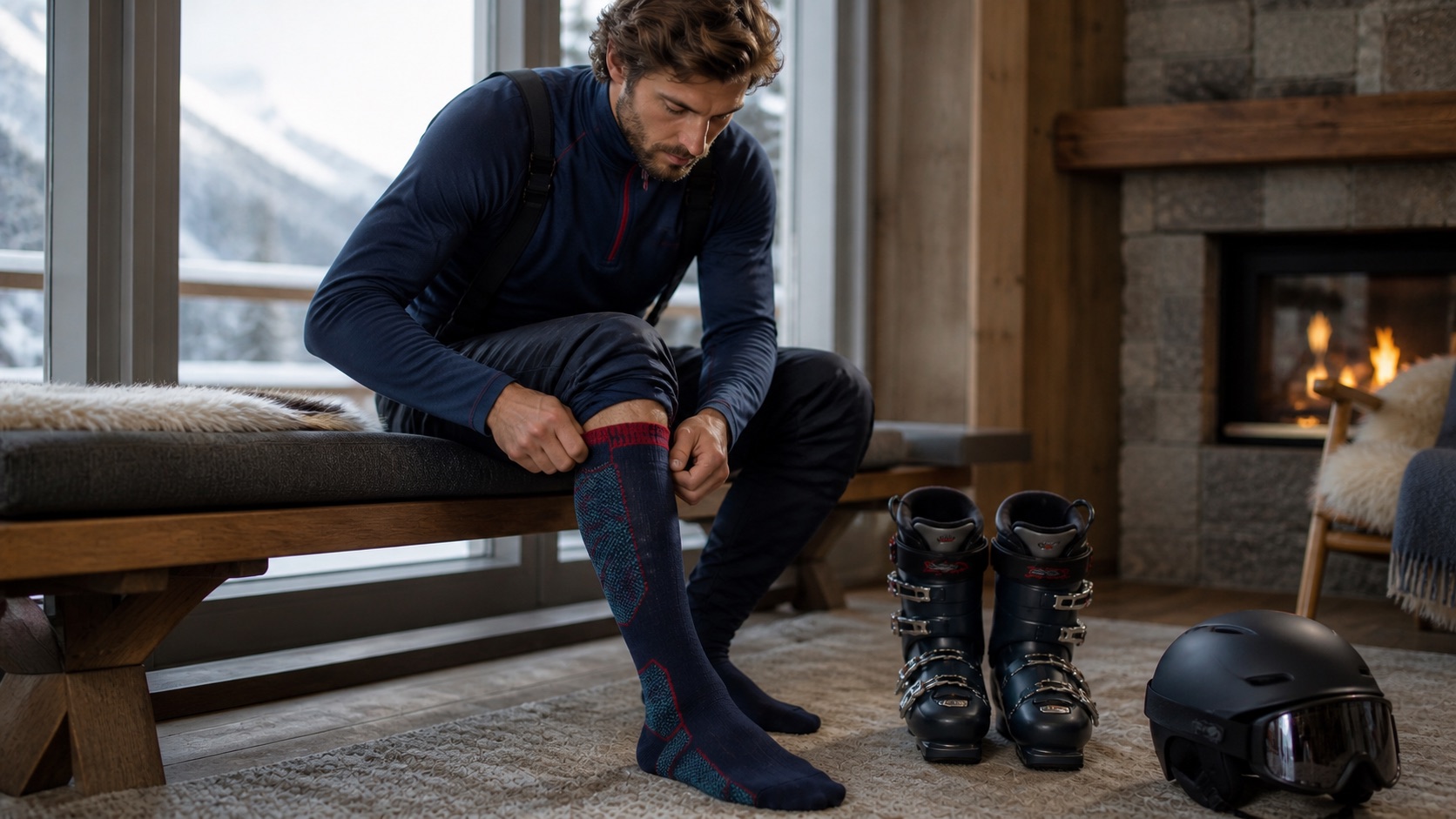
Ski socks should extend beyond the ski boot cuff. Over-the-calf construction protects the lower leg from direct contact with the liner and prevents the top edge of the sock from sitting inside the boot. Crew socks are usually too short for alpine ski boots.
The cuff should stay up without feeling harsh. A wide, elasticated cuff distributes pressure more comfortably than a narrow band on many calves.
Look for Purposeful Construction
Useful design details may include:
- A flat or smooth toe seam
- Elastic support through the arch
- Reinforcement at the heel and toe
- Targeted shin or footbed cushioning
- Mesh zones over lower-pressure areas
- Left- and right-specific shaping
Not every skier needs every feature. A beginner may prioritize comfort and simple sizing, while an experienced skier with fitted boots may prefer a thin, anatomically shaped sock.
What to Avoid
Avoid wearing two pairs of socks in one ski boot. Layers can wrinkle, take up needed space and create extra friction. Avoid cotton for a full day on snow if the foot is likely to sweat, because retained moisture can feel cold and uncomfortable. Also replace socks that have thinned at the heel, lost their stretch or developed rough internal areas.
A Simple Ski Sock Buying Checklist
Before choosing, ask:
- Does the sock size match my foot rather than just my shoe label?
- Is it tall enough to sit above the boot?
- Does the cushioning match the available space in my boot?
- Is the fiber blend appropriate for my warmth and care preferences?
- Are the seams and elastic comfortable after ten minutes of wear?
Answering those questions will usually lead to a better result than choosing by thickness alone.
Frequently Asked Questions
Should ski socks be tight or loose?
They should be close-fitting and smooth, not painfully tight. The toes should still move naturally, and the cuff should not restrict the calf.
Are thin ski socks warm enough?
They can be when paired with a properly fitted, insulated boot. Warmth depends on the full boot-and-sock system, activity level and weather, not sock thickness alone.
How many pairs are useful for a ski trip?
That depends on trip length and laundry access. Rotating clean, fully dry pairs helps preserve comfort. Pack an extra pair in case one becomes wet.
Explore our ski sock collection to compare heights, cushioning levels and fiber blends for your next day on the mountain.