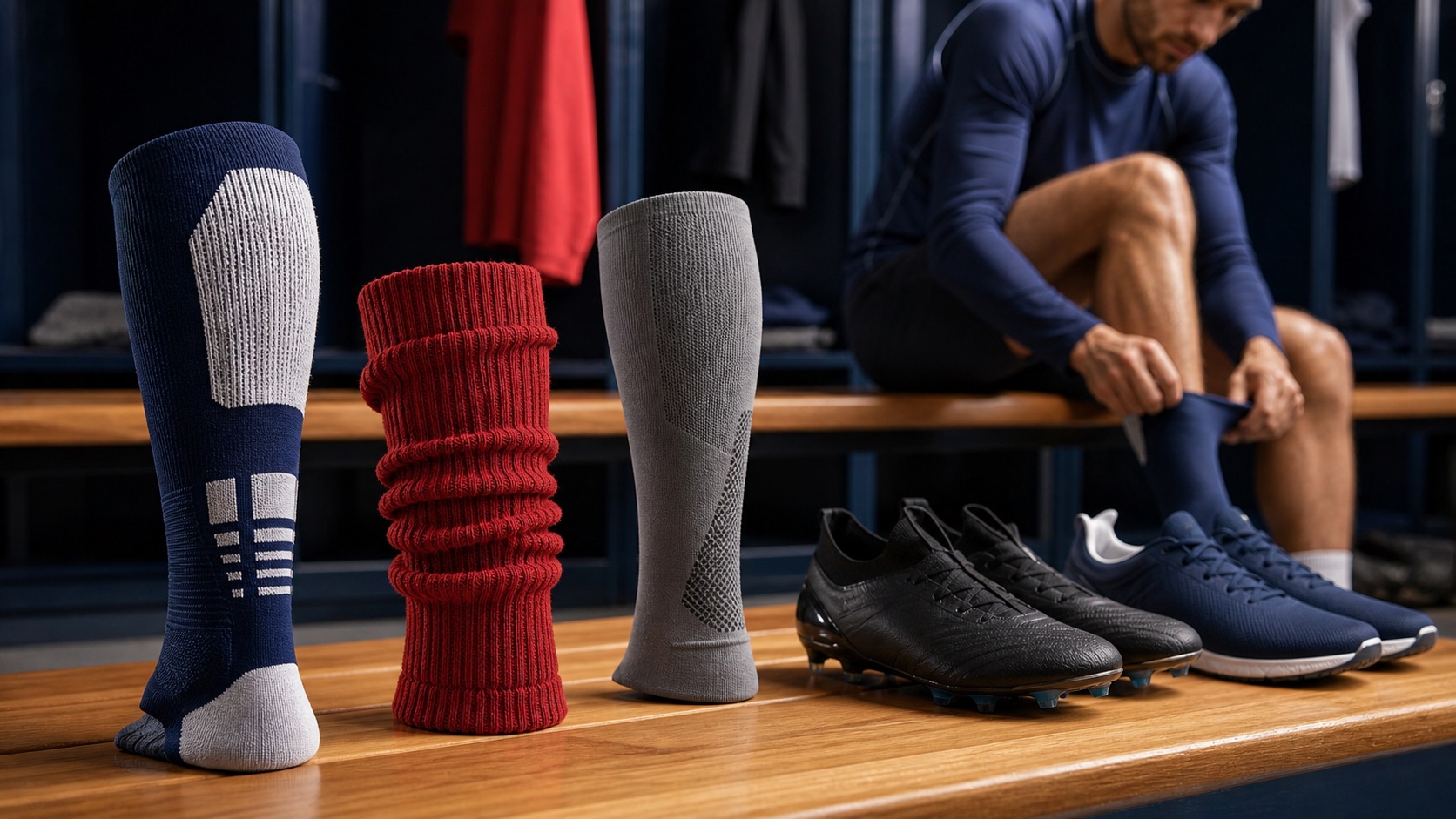
“Sock sleeve” can describe several products: a footless football sock worn over shin guards, a close athletic calf sleeve or a loose knitted leg warmer. They are not interchangeable. Each has a different purpose, construction and fit.
Identifying the intended use first makes both product search and ordering much clearer.
Football Sock Sleeves
Football or soccer sock sleeves replace the leg portion of a traditional full-foot team sock. Players commonly wear a separate performance sock inside the boot, position the shin guard, then pull the sleeve over the lower leg.
A useful football sleeve should:
- Cover the shin guard completely
- Match the team kit color
- Stay up without restrictive tension
- Create a smooth overlap near the ankle
- Meet current competition rules
Some players tape the overlap, but color and tape use may be regulated. Check with the league or tournament organizer. Our guide to wearing soccer socks with shin guards shows the full setup.
Athletic Calf Sleeves
Athletic calf sleeves are fitted tubes worn during sport or training. Some are marketed as compression garments, but compression level, sizing and intended use require careful definition. A general stretch sleeve should not make medical claims or be substituted for prescribed compression.
Choose by calf circumference and length, not shoe size. The sleeve should lie smooth and should be removed if it causes numbness, pain, discoloration or unusual swelling. People with health or circulation concerns should seek professional advice before using compressive products.
Knitted Leg Warmers
Fashion and dance leg warmers add warmth and texture from ankle to calf or knee. They may be worn over leggings, gathered above shoes or extended along the leg during warm-up. Acrylic, wool and cotton blends create different amounts of loft and stretch.
Unlike a football sleeve, a loose leg warmer is designed to drape or slouch. It should still avoid trailing fabric that could catch under the heel or on equipment.
For casual styling, see how to wear slouch socks.
Choose the Correct Dimensions
Measure leg length and calf circumference at the points specified by the seller. For football sleeves, also check shin-guard coverage. For fashion warmers, decide how much fabric is needed for folds.
Sizing up can create too much movement; sizing down can create uncomfortable pressure. A good product chart includes relaxed and stretched dimensions or a clear circumference range.
Compare Materials
- Polyester or nylon blends: smooth, durable and quick-drying for team sport sleeves
- Elastane: stretch and recovery in fitted athletic products
- Merino wool blends: warm yet adaptable for outdoor or dance warmers
- Acrylic: soft loft, color and wool-free warmth
- Cotton blends: familiar feel for casual and light warm-up styles
Decoration changes the feel. A knitted logo lies within the structure, embroidery adds thickness and printing allows detail on compatible fabrics.
Care and Replacement
Wash sleeves after sport or according to the label. Use a mesh bag for small or delicate pieces and avoid excessive heat that can weaken stretch. Lay knitted leg warmers flat when directed so they retain shape.
Replace a fitted sleeve when it slides, twists or loses recovery. Retire a fashion warmer if loose yarns could catch underfoot.
Frequently Asked Questions
Are football sock sleeves allowed in matches?
They may be, but the full setup must meet the competition's current kit rules. Confirm colors, tape and shin-guard coverage with the organizer.
Are calf sleeves the same as compression socks?
No. “Sleeve” describes the footless shape; it does not establish a medical compression level or purpose.
Can leg warmers be worn over shoes?
They can be styled over some boot shafts, but fabric should never sit beneath the heel or interfere with safe movement.
Explore our sock sleeves and leg warmers for team sport, warm-up and lifestyle use.