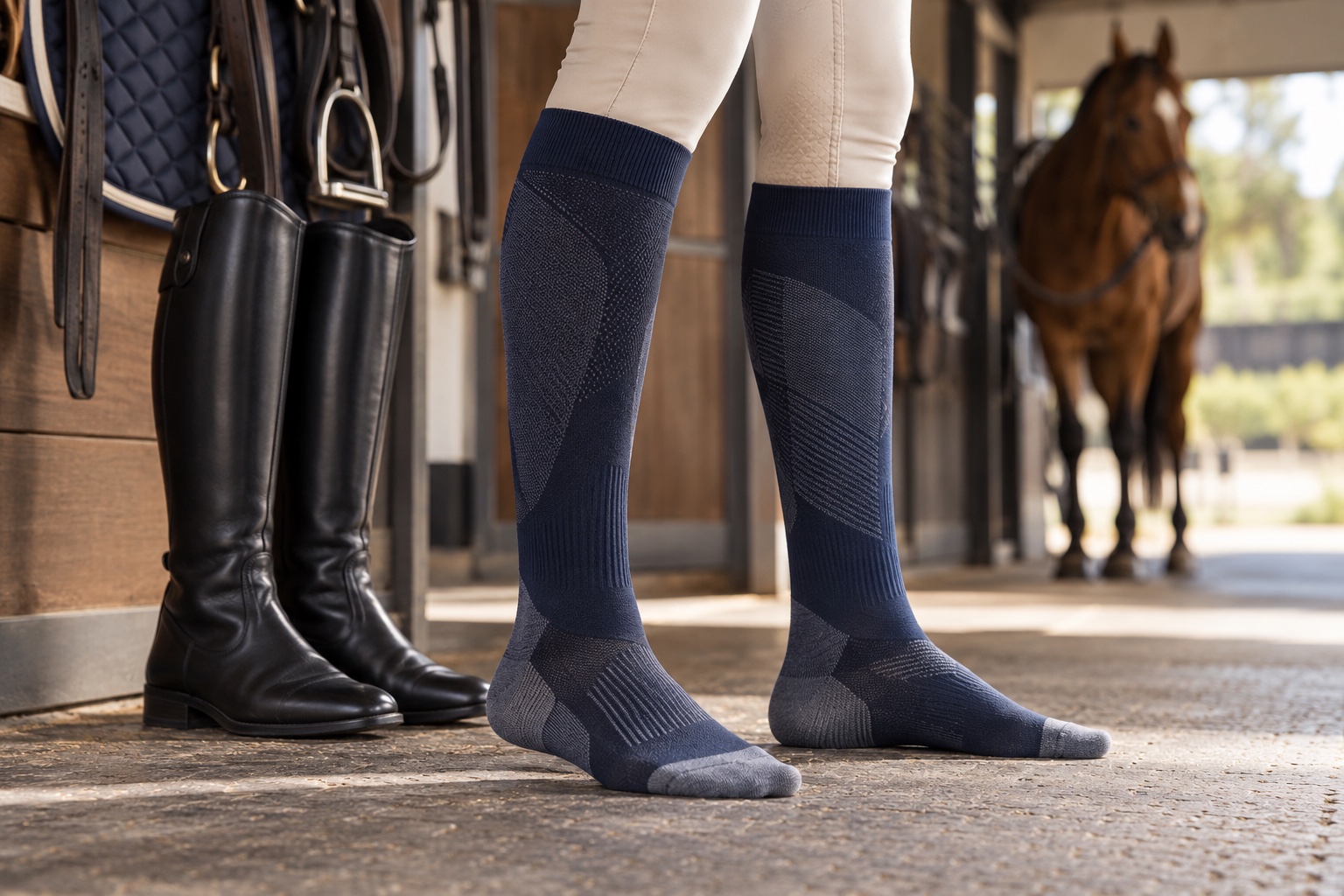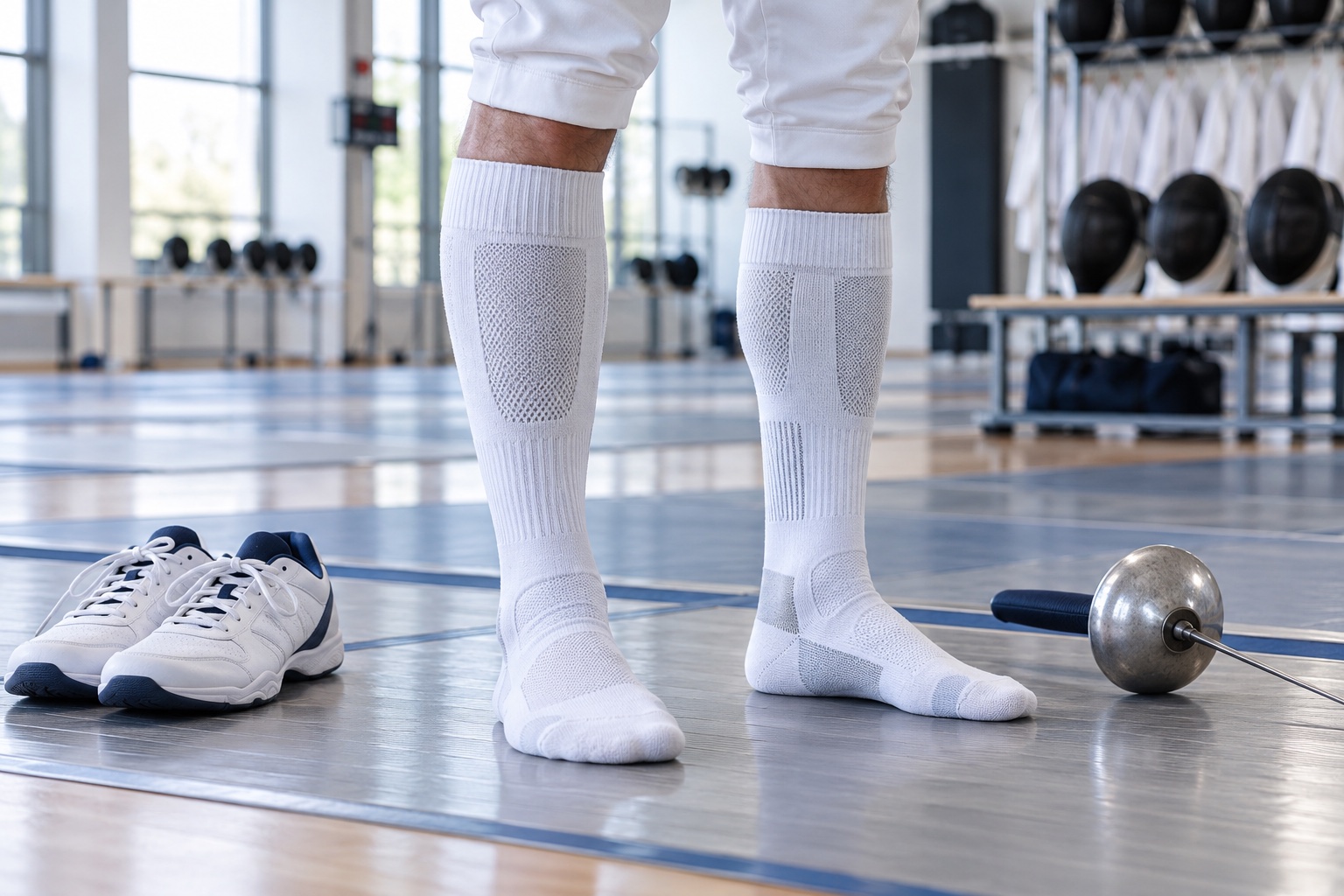

Running socks repeat the same contact with the shoe for hundreds or thousands of strides. A small wrinkle or poorly placed seam can become a major distraction over distance. The right pair stays aligned, handles moisture and fits the available space inside the running shoe.
No sock can promise to prevent every blister, but thoughtful fit and construction can reduce avoidable friction and moisture problems.
Choose the Size by Foot Length
The heel pocket should wrap the heel, with no loose fabric under the arch or toes. A sock that is too large can bunch; a sock that is too small may pull against the toes and slide down at the heel.
Use the maker's chart and note whether it spans several shoe sizes. Runners at the edge of a range may need to compare two sizes. Try socks late in the day or after light activity if your feet typically change volume.
Select a Height Above the Shoe Collar
No-show running socks should include a heel tab or a cut that remains above the rubbing point. Ankle and quarter heights offer more coverage without reaching the calf. Crew socks add protection from trail debris and can carry reflective or team elements.
Choose function first: if the shoe collar touches bare skin, the sock is too low for that shoe.
Light, Medium or Maximum Cushioning?
Light socks preserve internal shoe volume and provide a close feel. Medium cushioning under the heel and forefoot suits many daily miles. Heavier cushioning may feel comfortable on long or easy runs if the shoe has room.
Compare cushioning by zone, not only by marketing category. A ventilated instep with padded contact areas can balance comfort and bulk.
Materials for Moisture Management
Running socks commonly use polyester, nylon, polypropylene, merino wool or blends. These fibers can move or manage moisture and dry more effectively than a casual cotton-rich sock. Elastane maintains shape around the arch and heel.
Cotton absorbs moisture and may remain damp during exercise, so it is not usually the first choice for longer or high-sweat runs. That does not make every synthetic sock equal; knit structure, ventilation and fit still matter.
Seam and Toe Construction
A flat or linked toe seam reduces a raised ridge at the front of the sock. Some designs move the seam above the toes, while anatomical left/right socks shape the toe box separately.
Toe socks separate the digits and may suit runners who experience friction between toes, but they require accurate sizing. Test them gradually rather than introducing a new design on race day.
Compression and Arch Bands
An elastic band through the midfoot can help keep the fabric in place. It should feel secure, not painful. Standard “compression” marketing should not be confused with medical compression hosiery, which requires appropriate sizing and may need professional guidance.
Rotate, Wash and Inspect
Use clean socks for each run and let them dry fully. Follow the care label; high heat can shorten the life of elastane. Rotate several pairs so you can compare what works in different shoes and weather.
Inspect the underside in bright light. Replace socks when thinning, hardened fibers or lost stretch change the feel. Record which sock-and-shoe combination works on long runs so race-day choices are familiar.
Race-Day Checklist
- Wear a tested pair, not a brand-new style.
- Match the cushioning to the race shoes.
- Check weather and choose appropriate height and material.
- Smooth the heel and toe before lacing.
- Pack a dry spare for travel or a long event.
Frequently Asked Questions
Are running socks worth it?
Purpose-built socks can offer more secure shaping, moisture management and targeted cushioning than casual socks. The value depends on fit and training needs.
Are thick running socks better for long distances?
Not automatically. Use the amount of cushioning that remains comfortable inside the shoe over the intended distance.
How often should I replace running socks?
There is no universal mileage. Replace them when they lose shape, slip, thin at contact points or develop rough areas.
Explore our running sock collection for road, track and trail-ready heights and cushioning levels.