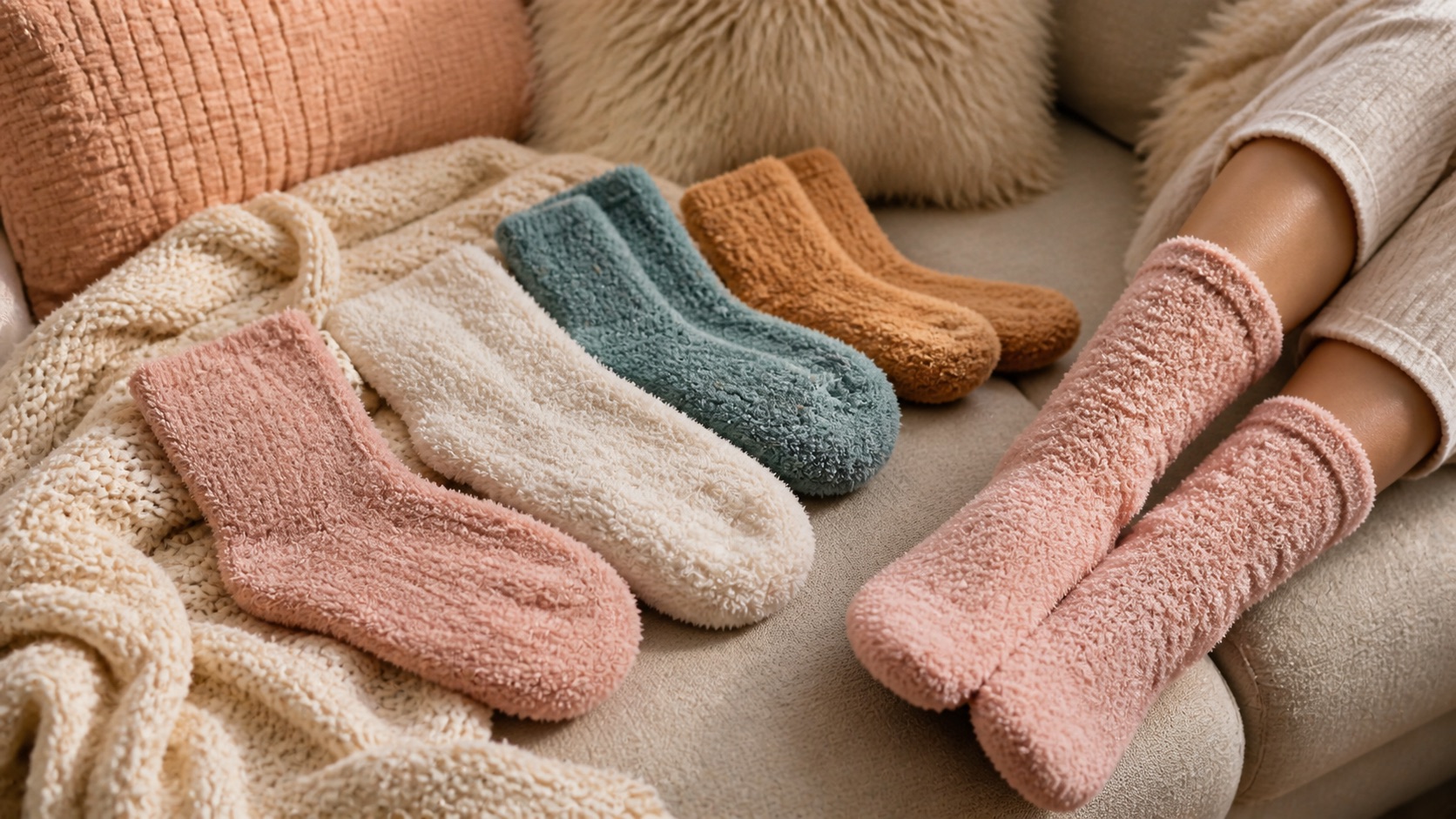
Coral fleece socks are known for a soft, fluffy surface and lightweight warmth. Despite the name, coral fleece is generally a polyester-based pile fabric rather than a fiber from the sea. It is popular for winter lounging, gifts and indoor slipper socks because it feels plush and can be made in bright colors and patterns.
The pile is only one part of a useful pair. Fit, seam construction, sole grip and care determine how well the socks work day to day.
What Makes Coral Fleece Different?
Coral fleece uses fine synthetic fibers raised into a dense pile. Compared with a knitted acrylic sock, it often feels more like a soft blanket. The fabric can trap air for warmth without the weight of a heavy yarn.
Quality varies by pile density, finishing and sewing. Check whether the fabric sheds, mats or becomes thin when stretched.
Choose the Warmth Level
Single-layer fleece suits moderately cool rooms. Double-layer or lined designs add warmth but also bulk. If the socks will be worn inside slippers or shoes, measure the available space; many plush pairs are intended only for indoor wear without footwear.
For sleep, a lighter loose-cuff design may be more comfortable. Compare our bed sock guide for nighttime considerations.
Look for a Secure Heel
Soft fleece can stretch and slide if the shape is too loose. A defined heel seam, ankle elastic or ribbed cuff helps keep the foot aligned. The sock should not rotate so the side ends up beneath the sole.
One-size products need careful testing across the claimed range. Check both small and large feet for heel placement, toe room and cuff comfort.
Evaluate Non-Slip Tread
Floor-ready fleece socks often add silicone or polymer grips. Look for coverage under the heel, ball and toes. The tread should remain flexible rather than forming a hard patch.
No pair is slip-proof in every condition. Keep floors and grips clean and dry, use handrails where provided and choose more protective footwear for stairs, wet areas or outdoor surfaces.
Construction and Gift Details
Inspect seams at the toes and around the heel. Thick seam allowances can feel bulky inside a plush sock. Embroidery, ears, pompoms and appliqués should be securely attached and placed away from walking surfaces.
For retail or gift programs, consider size visibility, fiber labeling, care instructions and packaging that lets the pile recover rather than compressing it for long periods.
How to Wash Coral Fleece Socks
Follow the label. A gentle cycle with mild detergent helps protect many fleece products. Avoid excessive heat, which can affect synthetic pile, elastic and grip elements. Air dry or use low heat only when permitted.
Wash with similar soft items and close zippers or hooks on other garments to reduce snagging. Do not iron the pile or tread. Let thick pairs dry completely before storage.
Frequently Asked Questions
Is coral fleece made from coral?
No. It is a trade name for a soft fleece fabric, commonly made from polyester.
Are coral fleece socks suitable for shoes?
Most plush styles are too bulky for fitted shoes and are designed for indoor wear. Choose a thinner fleece liner only when the shoe has adequate room.
Why do fluffy socks lose softness?
Heat, abrasion, detergent residue and compact storage can mat the pile. Follow the care label and avoid high heat.
Explore our coral fleece and fluffy socks in bed, lounge and grip-sole styles.