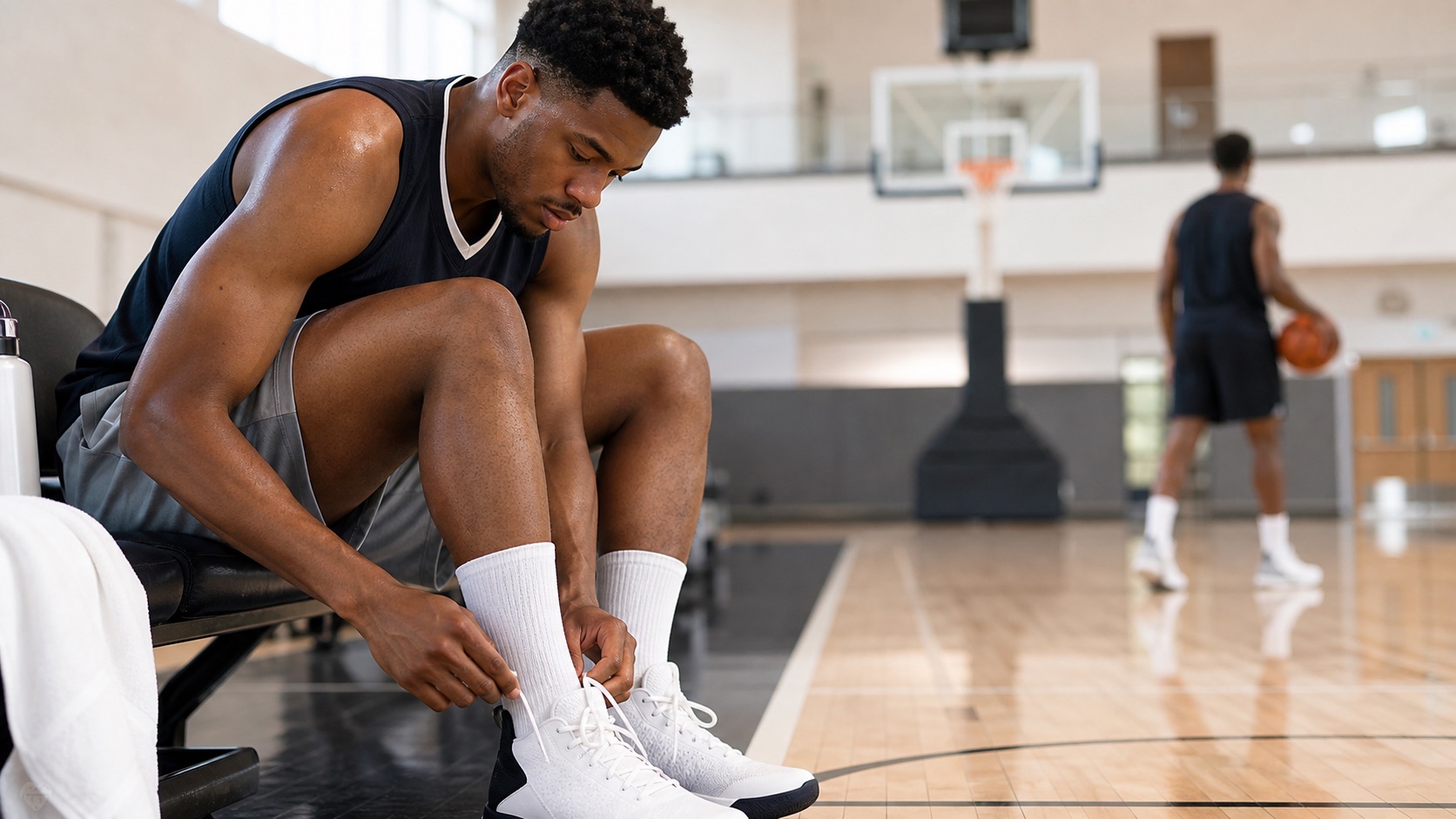
Basketball involves repeated starts, stops, jumps and changes of direction. Socks sit between the foot and the shoe through every movement, so fit and construction matter. Good basketball socks should stay aligned, manage moisture and place cushioning where it works with the player's footwear.
The “best” pair is the one that fits the foot and shoe as a system. Use this guide to narrow the options.
Begin With Basketball Shoe Fit
Put on the socks before judging a new pair of basketball shoes. A heavily padded sock takes up more internal space than a thin training sock and can change how the toes and heel feel.
The correct combination should allow the toes to lie naturally while the heel remains secure. Watch for:
- Toe pressure after lacing
- Heel movement during quick stops
- Bunching under the arch
- A seam pressing against a toe
- Excess volume around the ankle
If a thicker sock makes a well-fitted shoe too tight, choose targeted cushioning rather than a bulky all-over knit.
Choose Cushioning by Zone
Basketball socks often add terry cushioning under the heel and forefoot. These areas receive repeated contact, while a thinner instep can reduce bulk and improve ventilation. Some designs extend padding around the ankle or Achilles area, but the shape should not interfere with the shoe collar.
More cushioning is not always more comfortable. Players who use close-fitting shoes may prefer a light-to-medium footbed. Try the actual court movements rather than judging softness while standing still.
Crew, Quarter or Ankle Height?
Sock height is partly preference and partly protection from shoe contact.
- Crew socks extend up the lower leg and are common for uniforms and team graphics.
- Quarter socks cover the ankle with less fabric on the leg.
- Ankle socks create a minimal look but must still rise above any area that rubs against the shoe.
The cuff should stay in place without feeling restrictive. Teams should also check uniform color and logo requirements.
Materials and Moisture Management
Many performance basketball socks blend polyester or nylon with elastane. The synthetic yarns can help move moisture and withstand frequent washing, while stretch keeps the sock close to the foot. Cotton may add softness but can retain moisture, especially during long sessions.
Look beyond the fiber list for mesh zones, reinforced high-wear areas and knit density. A well-constructed blend is more informative than a marketing label alone.
Arch Compression and Fit Bands
Elastic through the midfoot can help prevent bunching, but it should not feel painfully tight. A fit band is not a medical support and should not cause tingling or numbness. Players with circulation concerns or foot conditions should seek appropriate professional advice before using highly compressive products.
Build a Rotation for Training
Frequent players benefit from several pairs so no damp sock is reused. Wash after each session, follow the care label and dry completely. Check the heel and forefoot for thinning; wear in those zones can change shoe fit before a hole becomes visible.
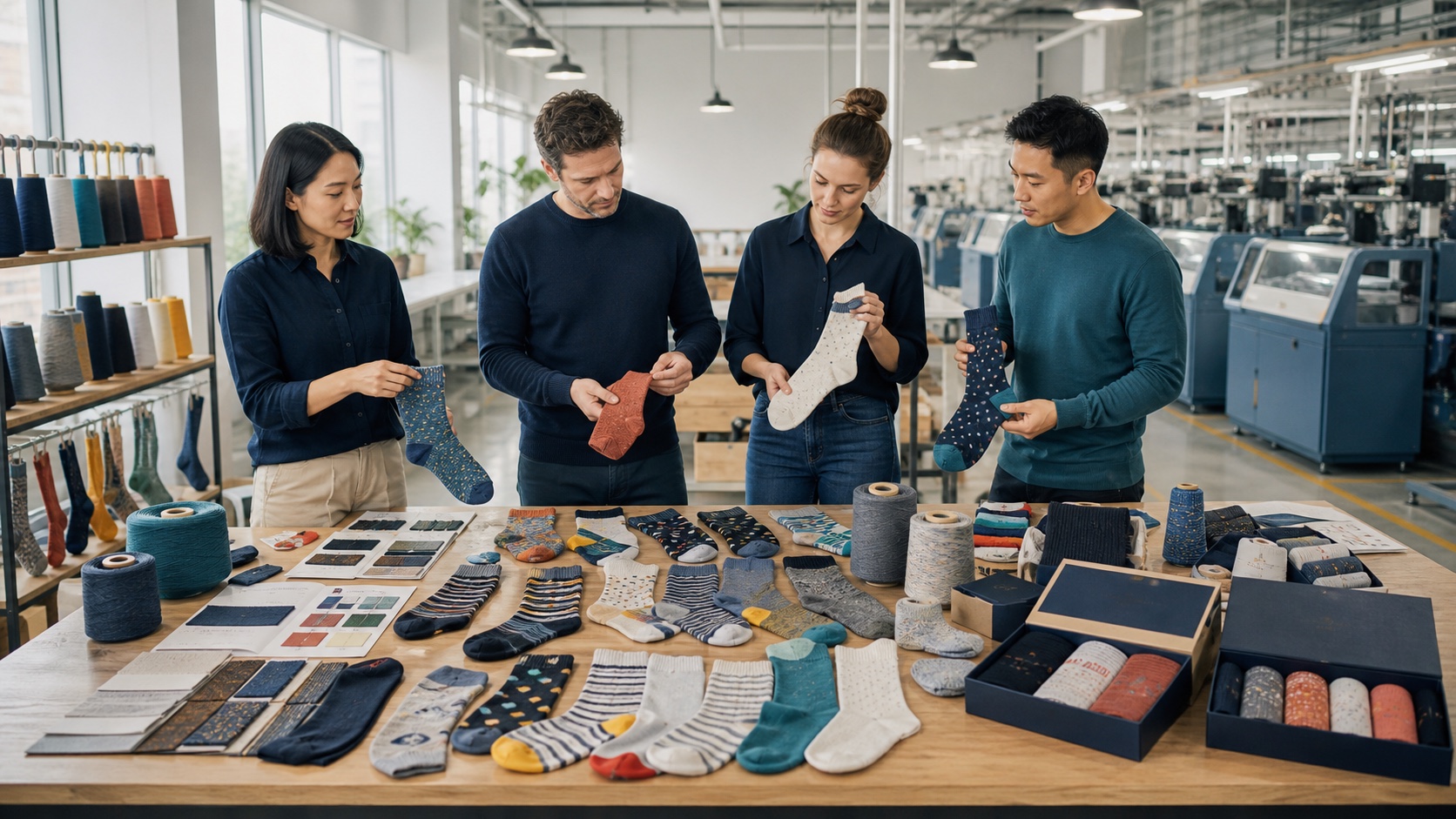
For teams, use separate colors for practice and games or add a player identifier to simplify sorting. Confirm size breakdowns from actual roster data rather than ordering equal quantities of every size.
Basketball Sock Buying Checklist
Choose a pair that:
- Matches the shoe's internal volume
- Keeps the heel and cushioning aligned
- Has a smooth toe area
- Covers potential shoe-rub zones
- Uses breathable, durable yarns
- Stays secure through lateral movement
- Can be washed as often as the player trains
Frequently Asked Questions
Are thick socks better for basketball?
Not automatically. Cushioning should improve comfort without crowding the shoe. Targeted padding is often more practical than maximum thickness.
Can I wear running socks for basketball?
You can if they fit securely and work with the shoe, but basketball-specific designs may use different cushioning, height and ankle coverage for court movement.
How often should basketball socks be replaced?
Replace them when the heel or forefoot thins, the sock slips, the elastic loses recovery or internal roughness causes discomfort. Frequency depends on use and care.
Compare heights, cushioning patterns and team colors in our basketball socks collection.