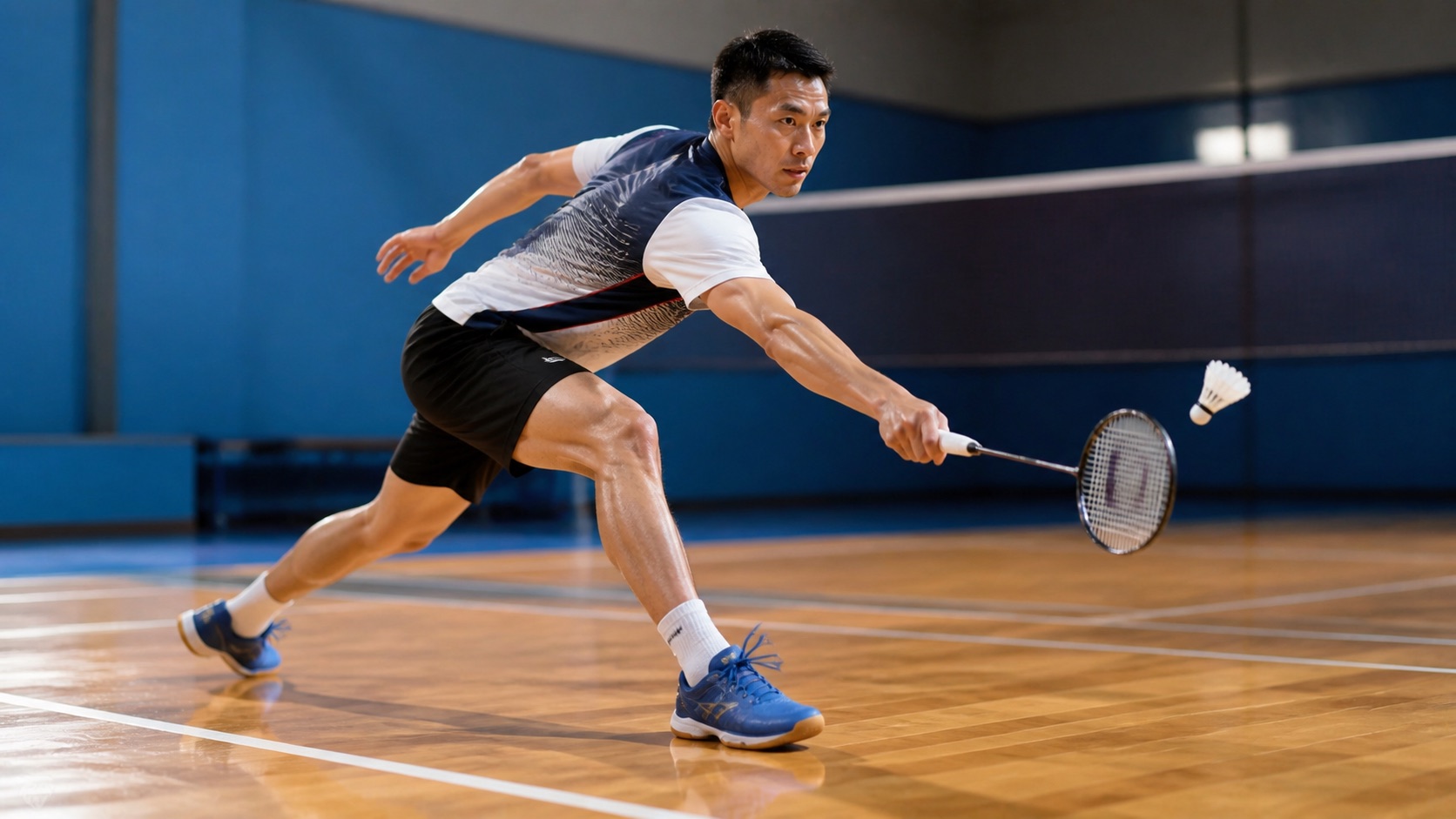
Badminton asks the feet to brake, lunge and change direction in a small space. A sock that slips, bunches or holds too much moisture can become distracting quickly. Badminton socks should work closely with indoor court shoes, placing a secure fit and sensible cushioning ahead of unnecessary thickness.
Here is how to evaluate a pair for training, club nights or competition.
Fit Comes First
The heel pocket should wrap the heel without excess fabric. The toe area should lie flat, and any cushioning should remain centered beneath the foot. If the sock rotates during a side lunge, its size or shape may not be right.
Try badminton socks with the shoes you actually use. Walk, perform a split step and make several controlled lateral movements. Check that the combined thickness does not crowd the toes or lift the heel.
Cushion the High-Contact Areas
Many players prefer cushioning under the heel and forefoot, where the foot repeatedly contacts the shoe during lunges and takeoffs. A thinner section through the arch or instep can reduce bulk. The objective is consistent contact, not a soft feeling at any cost.
Players who use a close-fitting performance shoe may need a lighter sock than those wearing a roomier recreational model. Insoles also affect available space, so test the complete setup.
Choose a Height That Prevents Rubbing
Ankle and quarter-height socks are common for indoor court sports. The cuff should rise above the shoe collar anywhere friction occurs. Low no-show styles may disappear visually, but they are only suitable if the heel tab remains high enough and the sock does not slip.
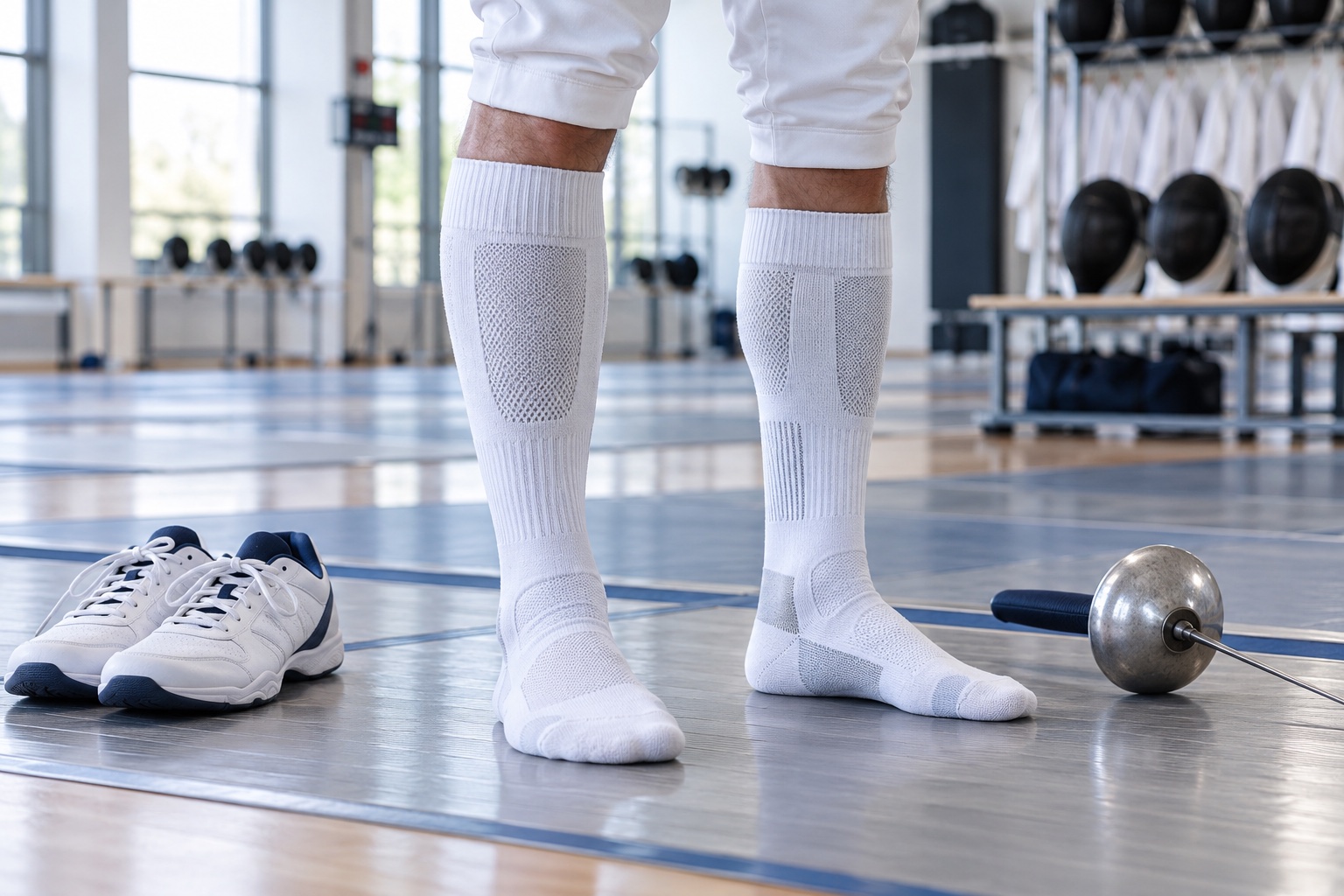
Crew socks offer more lower-leg coverage and space for team colors. Height does not determine performance by itself; secure fit does.
Look for Moisture-Friendly Construction
Badminton sessions can be intense, especially in warm sports halls. Polyester, nylon and other synthetic blends are common because they can dry efficiently and retain shape. Elastane supports a close fit. Cotton blends may feel soft, but higher cotton content can hold more moisture during demanding play.
Ventilated knit zones over the instep can support airflow. Reinforced heel and toe yarns help with repeated use. Always follow the care label, since frequent high heat can shorten the life of stretch fibers.
Avoid These Common Sock Problems
- Bunching beneath the arch: often a sign of excess length or weak fit bands.
- Heel slipping into the shoe: the sock may be too low, too large or stretched out.
- Toe pressure: the sock-and-shoe combination may be too thick.
- Hot spots: check seams, wrinkles and shoe fit before adding more padding.
- Damp socks between matches: bring a clean spare pair for long sessions or tournaments.
Pain, persistent numbness or repeated blisters deserve attention beyond a sock change. Check footwear fit and consult an appropriate professional when needed.
Tournament Packing Checklist
Pack at least one clean spare pair, especially for multi-match days. Put used socks in a breathable laundry bag instead of sealing them damp with clean gear. Label team pairs discreetly if several players use the same style and color.
At home, wash after play and allow the socks to dry completely. Rotate pairs to reduce repeated wear on the same knit.
Frequently Asked Questions
Are badminton socks different from running socks?
They can be. Badminton designs may prioritize cushioning and fit for lateral indoor movement, while running socks are often optimized for repeated forward motion. A secure, compatible running sock may still work for some players.
Should badminton socks be thick?
Use enough cushioning for comfort without reducing space in the shoe. Medium or targeted cushioning is often more adaptable than a very thick sock.
Can I wear two pairs of socks for badminton?
Two pairs add bulk and may create wrinkles. A single properly fitted sports sock is usually simpler. If you are trying to solve shoe movement or blisters, assess the shoe fit as well.
Explore our badminton socks to compare ankle, quarter and crew styles for indoor court play.