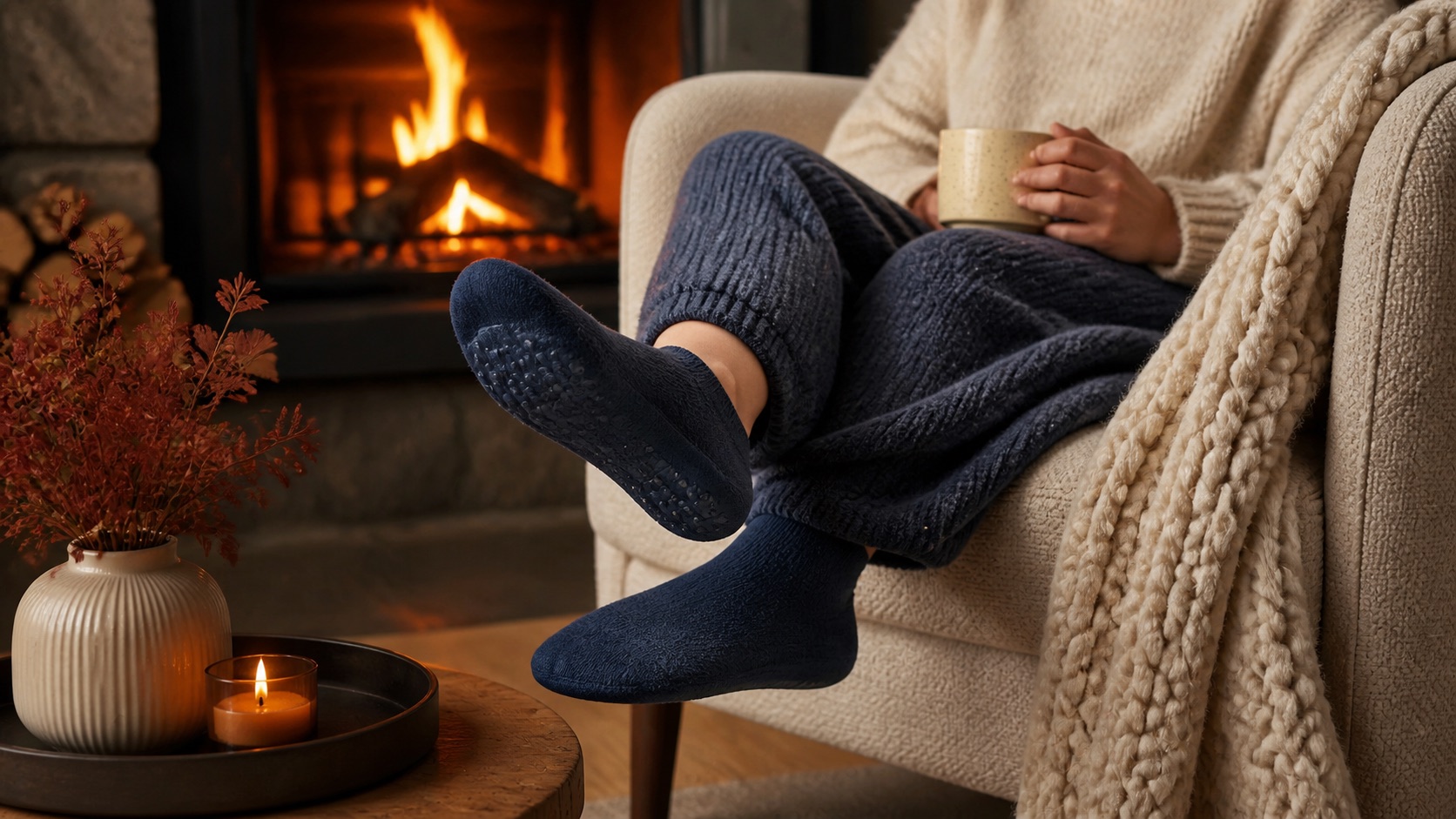
Acrylic slipper socks use soft synthetic yarn to create loft and warmth for indoor wear. They can mimic the cozy feel of wool while supporting colorful patterns and straightforward care. When a pair is intended for walking around the home, however, yarn is only one part of the decision. Sole grip, heel fit, lining and cuff comfort matter just as much.
Use this guide to compare acrylic floor socks for winter ranges, gifts or everyday lounging.
What Is Acrylic Yarn?
Acrylic is a manufactured fiber often used in knitwear because it can be lightweight, soft and warm. It takes color well and is available in fine or bulky yarns. In socks, acrylic is commonly blended with polyester or nylon for durability and elastane for recovery.
The label percentage does not predict the entire experience. A dense, brushed, ribbed or cable knit will each feel different even when made from a similar blend.
Why Acrylic Works for Slipper Socks
Acrylic is well suited to indoor winter styles because it can provide:
- A soft, wool-like hand feel
- Loft without excessive weight
- Bright and consistent color options
- Wool-free product choices
- Easy-care potential, depending on the blend
- Flexibility for jacquard, cable and novelty patterns
Customers who need high-performance moisture management for sport should compare technical blends. Acrylic slipper socks are designed primarily for warmth and relaxed indoor wear.
Check the Sole Grip
If the product is marketed as a floor sock, look for flexible grip elements beneath the heel, forefoot and toes. A full, balanced pattern keeps more of the tread in contact with the floor than decoration in one small zone.
Grip performance depends on fit, cleanliness and floor conditions and should not be described as a guarantee against falls. Keep the tread and surface clean and dry, and use suitable footwear where greater protection is needed.
Read our broader grip socks for home guide for sole-pattern and safety considerations.
Lined or Unlined?
An unlined acrylic knit feels lighter and dries with less bulk. A fleece or brushed lining adds softness and insulation but can change sizing. Check that the lining is attached securely and does not pull out with the foot.
For lined designs, inspect the toe area and heel from the inside. Multiple layers can create hidden folds. The foot should remain secure rather than floating inside a loose lining.
Get the Fit Right
Chunky appearance should not mean an oversized foot. The heel pocket should align with the heel so the grip remains underneath. A ribbed cuff can hold the ankle, while a turn-over cuff creates a relaxed look.
For wide feet or ankles, choose a genuinely wider construction. Sizing up only for circumference may leave excess length. Our extra-wide socks guide explains the difference.
Design Details for Retail Collections
Acrylic slipper socks work well for seasonal colors, fair-isle patterns, cables, pompoms and gift packaging. When developing a product, keep decorative features away from the walking surface and ensure embellishments cannot catch easily.
Evaluate samples for:
- Pilling after washing and abrasion
- Color transfer or fading
- Grip adhesion and flexibility
- Lining stability
- Cuff recovery
- Accurate size labeling
How to Wash Acrylic Slipper Socks
Always follow the label. Many acrylic blends can be washed gently in cool or warm water, but high heat may damage elastic, cause surface changes or affect sole grips. Use mild detergent and air dry or tumble dry only as directed.
Do not iron grip elements. Make sure thick pairs are dry through the lining before storage.
Frequently Asked Questions
Are acrylic slipper socks as warm as wool?
Warmth depends on yarn, knit thickness, lining and fit as well as fiber. Acrylic can create a warm, lofty sock, while wool offers different moisture and temperature properties.
Do acrylic socks pill?
Some do, especially where fibers rub against flooring, shoes or each other. Yarn quality, knit and care all influence pilling.
Can acrylic floor socks be worn outdoors?
They are generally designed for indoor use. Outdoor surfaces can damage the knit and do not provide the protection of proper footwear.
Explore our acrylic floor socks in lined, chunky and grip-sole designs.