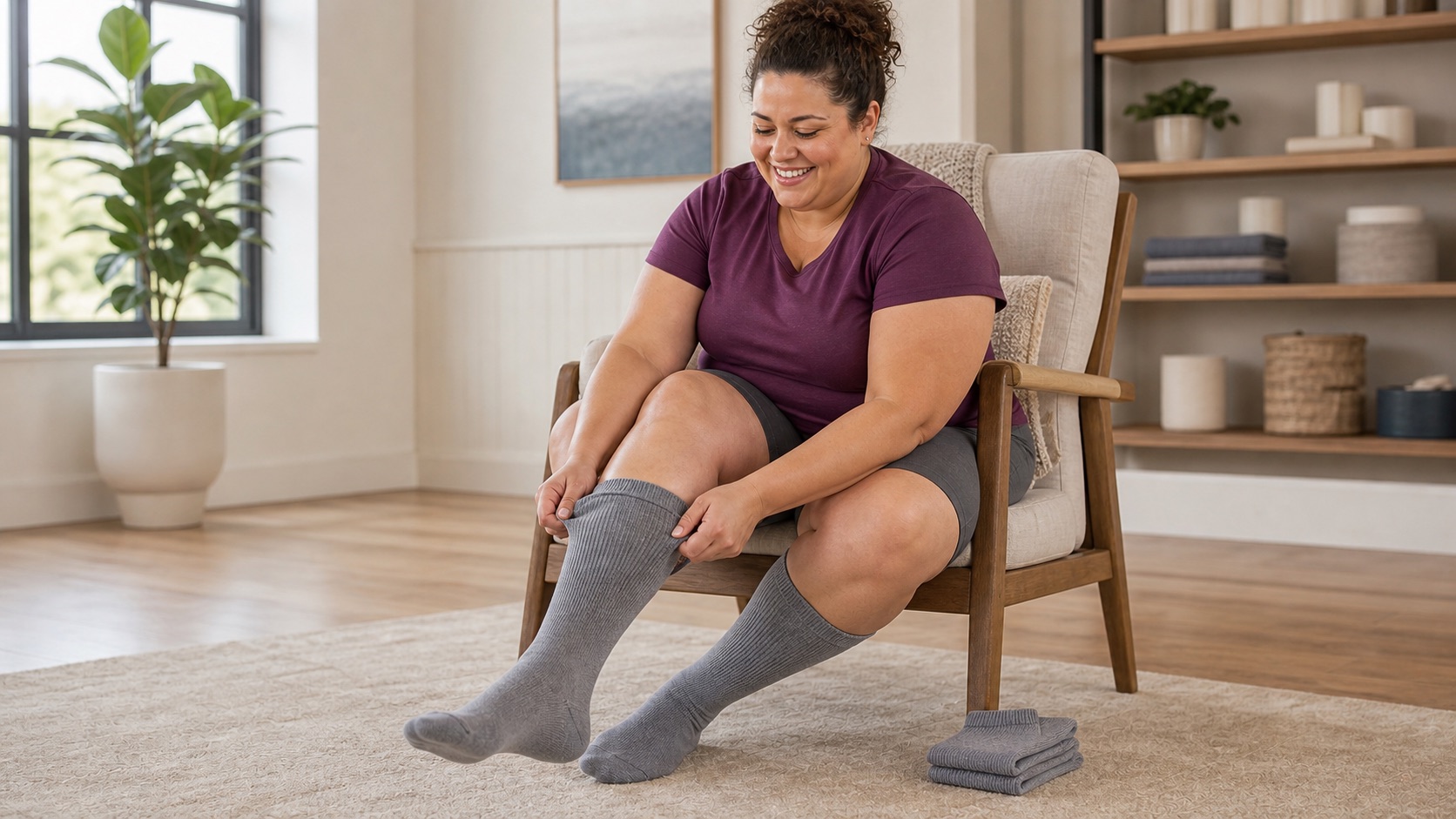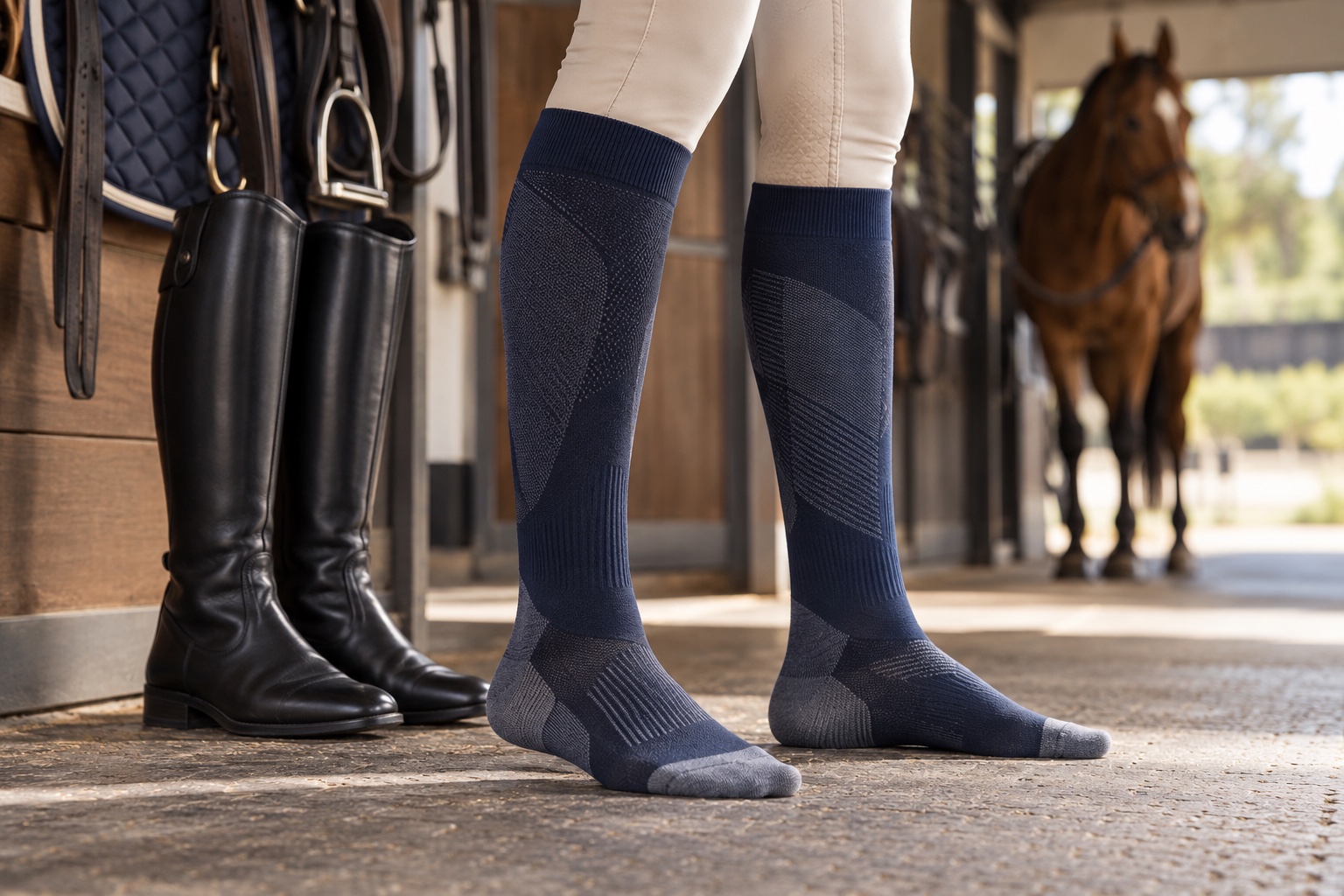

People living with diabetes may need to pay particular attention to their feet because diabetes can affect sensation and blood flow. A sock can provide a layer between the skin and shoe, but it cannot treat neuropathy, poor circulation, ulcers or infection. Product choice should be part of a foot-care plan made with a healthcare team.
This educational guide summarizes practical sock features and official foot-care advice. It is not a substitute for a personal assessment or medical care from a qualified healthcare professional.
Why Sock Fit Matters
The U.S. National Institute of Diabetes and Digestive and Kidney Diseases advises wearing clean, lightly padded socks that fit well and notes that socks without seams are best. It also recommends wearing shoes and socks rather than walking barefoot, including indoors, to reduce injury risk. Read the complete NIDDK diabetes foot-care guidance.
A suitable sock should lie smooth against the skin. It should not bunch beneath the foot, create a ridge at the toes or leave a painfully tight band at the leg. “Loose” is not the goal: excess fabric can fold and rub.
Features to Discuss With a Healthcare Professional
Depending on individual needs, useful features may include:
- A seamless or very smooth toe construction
- Light padding under the foot
- Moisture-managing fibers
- A wide, gentle cuff
- A light color that makes drainage or blood easier to notice
- Accurate sizing with enough toe room
The American Diabetes Association recommends socks that fit well, are not too tight, manage moisture, avoid bothersome seams and provide padding when needed. Its guidance also emphasizes daily foot care and well-fitted shoes. See the ADA foot-protection tips.
These features do not make one design suitable for every person. Foot shape, skin condition, sensation, circulation and footwear all affect the decision.
Non-Binding Is Not the Same as Compression
A non-binding sock is designed to avoid a narrow, restrictive cuff. A compression sock applies graduated or defined pressure for specific purposes. The two should not be treated as interchangeable.
Do not self-prescribe compression based on a product page. Ask a healthcare professional whether compression is appropriate, particularly if you have peripheral artery disease, swelling, neuropathy, wounds or a history of blood clots.
Choose Moisture-Managing Materials
Moist skin can be more vulnerable to breakdown. Synthetic blends or wool may help move moisture, while a well-designed knit can improve drying. The ADA specifically points to synthetic fabric or wool as options for moisture management.
Check the finished sock rather than relying only on a fiber name. Seams, fit, padding and drying performance all matter.
Check Feet and Socks Every Day
Official guidance recommends checking the feet daily. Look at the tops, soles, heels and spaces between the toes. A mirror can help with the soles. Also inspect the inside of shoes before putting them on.
When removing socks, look for:
- Cuts, blisters or sores
- Red or dark areas
- Swelling
- Drainage or blood on the sock
- Cracks or skin changes
- New pressure marks
Contact a healthcare provider promptly about a blister, cut, sore or other change that does not begin healing, and follow their urgent-care advice. Loss of feeling may mean a serious problem is not painful.
Washing and Replacement
Wear a clean, dry pair and follow the label for washing. Avoid products that leave irritating residue, and make sure socks dry completely. Check the interior after laundering for rough fibers, hardened stains or a damaged seam.
Replace pairs that bunch, become thin, lose shape or develop holes. Shoes also need to fit correctly; a sock cannot compensate for pressure from unsuitable footwear.
Frequently Asked Questions
Do all people with diabetes need special diabetic socks?
Needs vary. Some people may be comfortable in clean, well-fitting, smooth socks; others may need specific features or prescribed footwear. Ask the clinician who knows your feet and medical history.
Are diabetic socks supposed to be loose?
They should not be restrictive, but they also should not wrinkle or slide. The goal is a smooth, comfortable fit.
Can diabetic socks improve circulation?
Do not assume that an everyday diabetic sock treats circulation. Compression products are different and may not be appropriate for everyone. Seek professional advice.
What color is best?
Light colors can make blood or drainage easier to notice. Color is only one feature and does not replace a daily foot check.
Review our diabetic sock options with your healthcare professional to choose the appropriate size, seam and cuff construction.