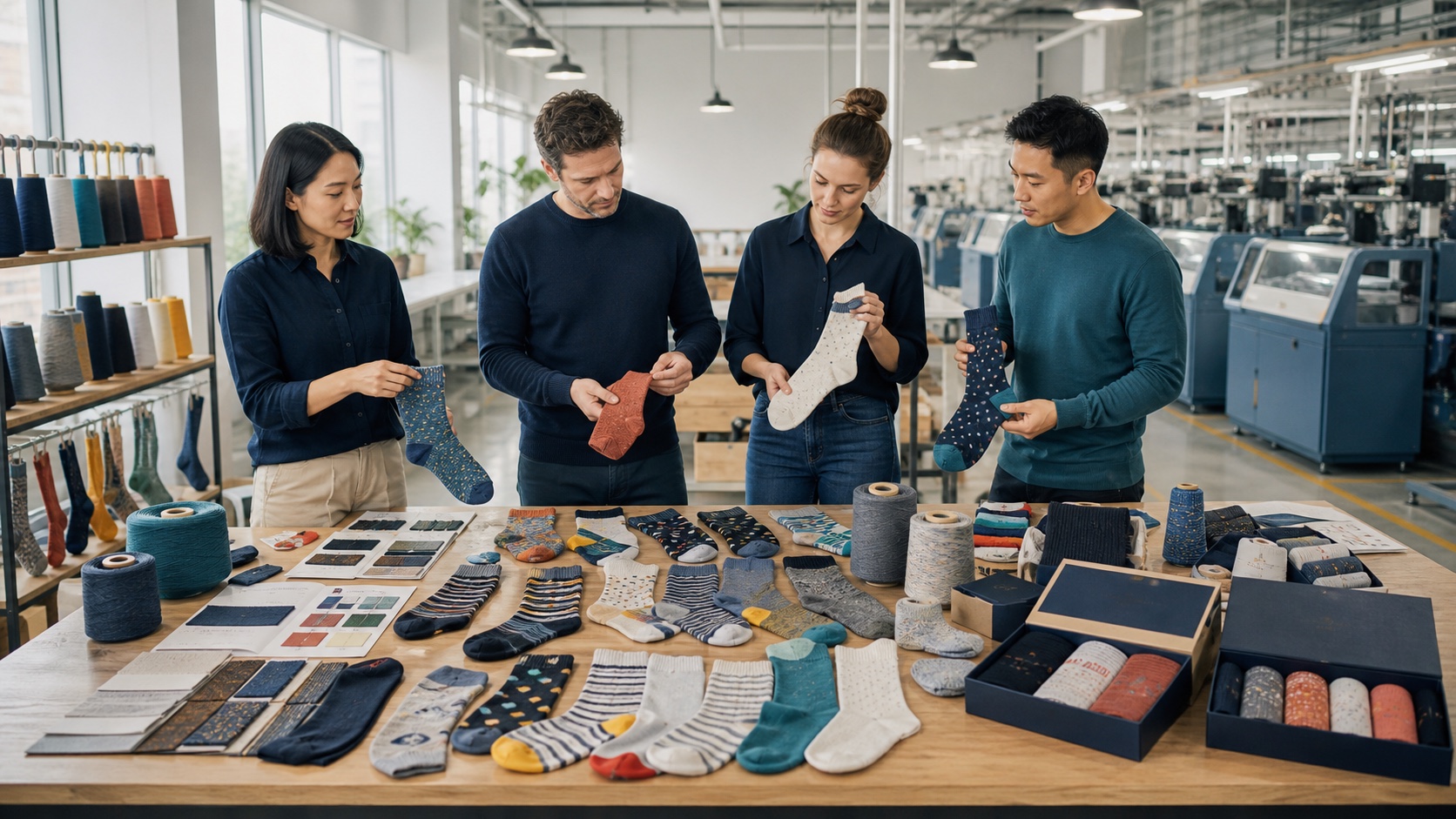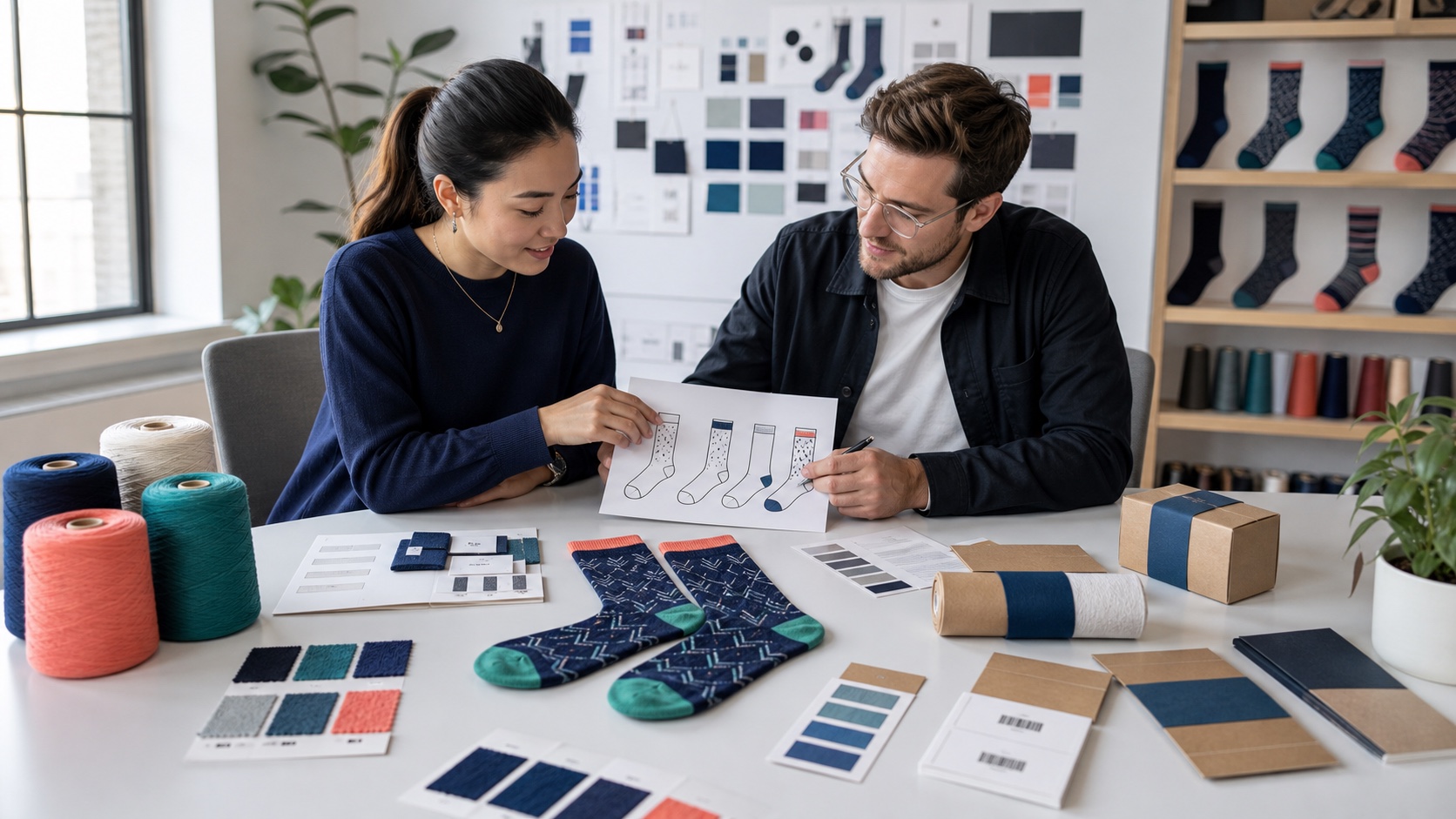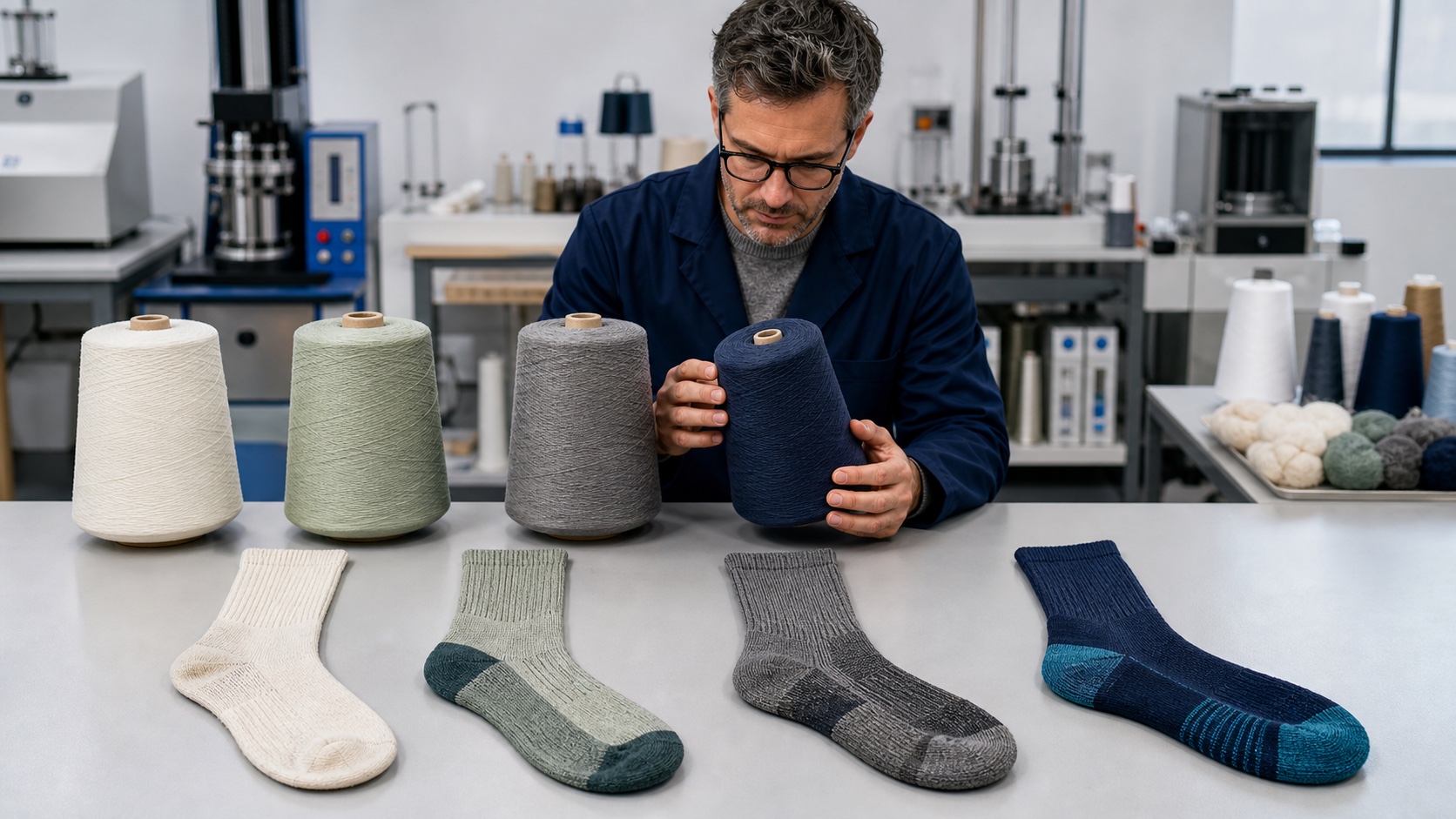
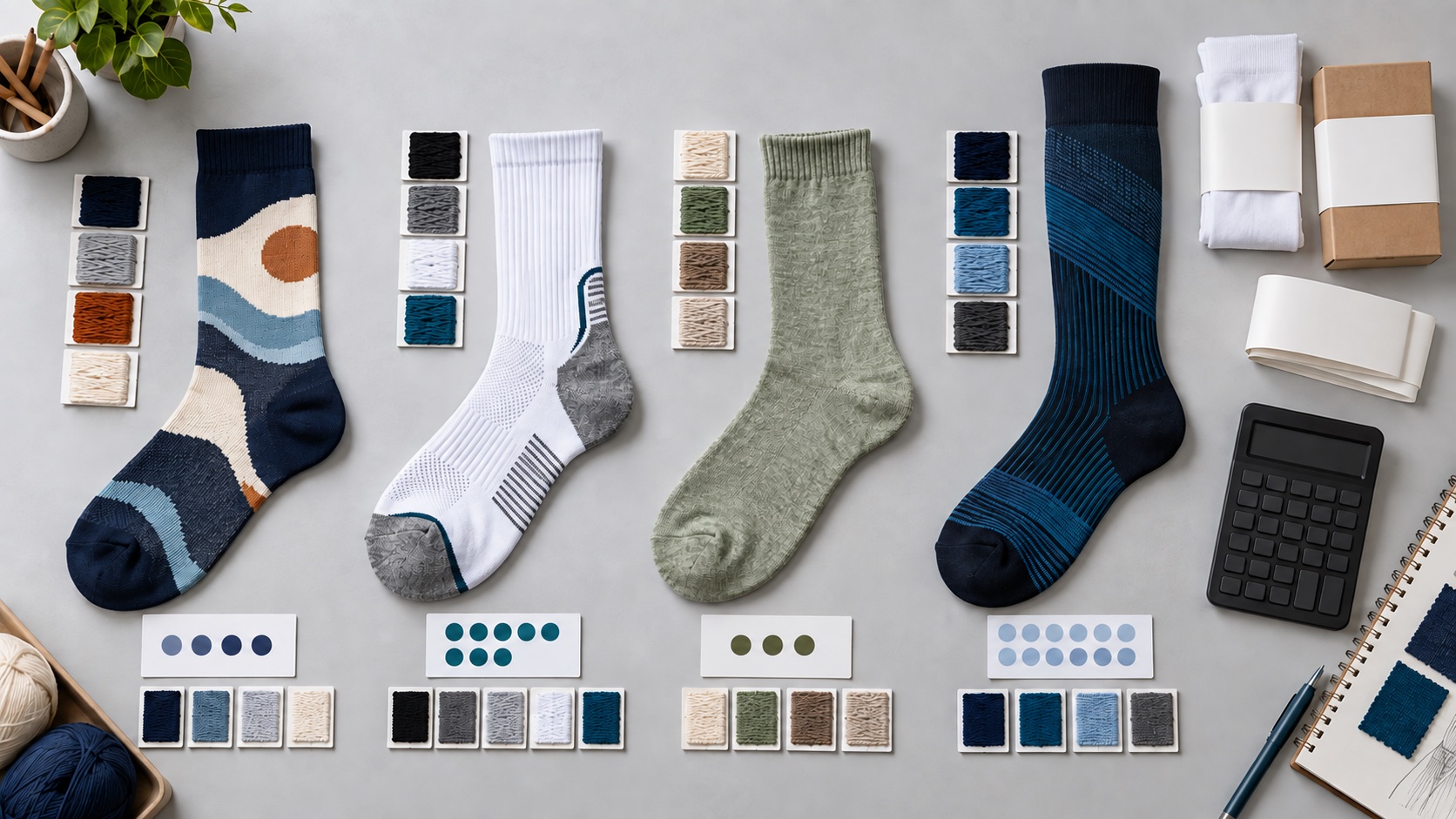
A custom socks MOQ is not one universal number. It is the smallest commercially practical production quantity for a defined product specification. That specification includes the sock construction, artwork, yarn colors, material, sizes, packaging and quantity split.
Two inquiries that both ask for “500 pairs of custom socks” can require very different production plans. One may use a single jacquard design, stock yarn colors and a standard paper band. The other may divide the same total across four designs, custom-dyed yarn, five sizes and individual boxes. The second order creates more setup and material requirements even though the total pair count is the same.
This guide explains how manufacturers review MOQ and how a B2B buyer can build a focused order without removing the features that matter to the customer.
What Does MOQ Mean for Custom Socks?
MOQ means minimum order quantity. For custom socks, the important question is not only the total number of pairs. Buyers should ask how the minimum is applied:
- Per sock construction or product style
- Per artwork or pattern
- Per colorway
- Per size, or across an agreed size assortment
- Per packaging format
A quotation should state the basis clearly. “300 pairs” is incomplete if it does not explain whether those pairs can be divided between colors and sizes. Before requesting prices, use the custom sock selection guide to identify the closest product direction and then define the number of designs, colors and sizes.
The Main Factors That Change Custom Sock MOQ
1. Construction and production technique
A standard crew sock, a graduated compression sock and a three-layer waterproof sock do not use the same equipment, materials or production sequence. Specialized structures may need more setup, dedicated testing or material preparation. Compare the relevant custom sock categories before treating two MOQ figures as interchangeable.
2. Number of designs and colorways
Each additional design or colorway can create a separate machine setup, yarn allocation and approval reference. A focused launch with one design in two coordinated colors is usually easier to plan than the same total quantity divided across many small designs.
3. Yarn and material availability
Available yarn colors and standard blends can support a more efficient start. Custom dyeing, specialty fibers, metallic yarn, merino blends or technical membranes may be subject to their own material minimums. The material choice should still match the product use; replacing the correct yarn only to lower MOQ can weaken the final offer.
4. Size breakdown
Multiple sizes are often necessary, but every size needs a pattern, machine setting and quantity allocation. Share the expected customer size distribution instead of asking for an equal split by default. Wide-calf, youth and extended-size products also need appropriate grading rather than a simple label change.
5. Artwork complexity
Jacquard, digital printing, embroidery and sole grip handle artwork differently. Fine illustrations and photos may suit printing, while simplified repeat motifs may suit jacquard. Choosing the correct technique early reduces avoidable sampling changes. See the jacquard versus printed socks guide for a direct comparison.
6. Packaging and labeling
Standard bands, pouches or poly bags may be easier to source at a small starting scale than fully custom boxes, molded inserts or many language versions. Packaging suppliers can have minimums that are separate from the sock factory's knitting minimum.
7. Functional requirements and testing
Compression, waterproof, grip, healthcare and performance programs require careful specification and may require buyer-defined testing. Those requirements affect development effort and should be confirmed before the order is divided into many variants.
Why a Low-MOQ Quote Can Change After Artwork Review
An early MOQ is often based on a standard product direction. When final artwork arrives, the manufacturer may discover additional colors, embroidery, custom-dyed yarn, special packaging or a size split that changes the production plan. This is why a reliable supplier asks for more than a reference photo.
Send the actual logo or pattern, required colors, size allocation, packaging and intended material when asking for confirmation. Treat an unreviewed MOQ as a preliminary direction, not a final production commitment.
How to Plan a Smaller First Order
The goal is not simply to force every number lower. A better first order protects the product concept while reducing unnecessary variation.
- Lead with one hero construction. Choose the sock type that best expresses the brand or solves the clearest customer need.
- Limit the first artwork set. Use one strong design or a tightly related mini-collection instead of many unrelated concepts.
- Share base yarns and colors. Coordinated styles can often use the same core palette, simplifying purchasing and approvals.
- Use a realistic size assortment. Base the split on the target market and channel rather than offering every possible size immediately.
- Start with practical packaging. A well-designed paper band or pouch can look retail-ready without creating a separate complex pack for every variant.
- Separate launch and expansion phases. Approve a repeatable specification first, then add colors or styles using sales feedback.
For broader order planning, review the wholesale custom socks service page.
Compare Quotes on the Same Basis
A lower MOQ is not automatically a better offer. Confirm what is included and whether the product specification is comparable. Ask each supplier to identify:
- MOQ per design, color and size assortment
- Material composition and construction
- Artwork method and number of included colors
- Sample charges and revision assumptions
- Packaging format and labeling
- Reference sampling and bulk-production timing
- Testing, inspection and shipment terms
If one quotation uses a lighter construction or excludes the retail pack, the headline MOQ and unit price do not describe the same program.
Custom Sock MOQ Request Checklist
Send these details to receive a useful MOQ and quotation:
- Target wearer, market and sales channel
- Preferred sock category and height
- Material, thickness and functional direction
- Artwork file and color references
- Required sizes and estimated quantity by size
- Number of designs and colorways
- Packaging, barcode and label requirements
- Delivery destination and required timing
LoveCustomSocks reviews MOQ against the actual product brief. Product-page quantities are reference directions and must be confirmed after the design, material, size breakdown and packaging are reviewed.
Frequently Asked Questions
Is MOQ calculated per design or for the whole order?
It depends on the program. Some products require a minimum per design or color, while selected sizes may be combined within an agreed assortment. Ask for the calculation basis in writing.
Can different sizes be mixed within the MOQ?
Often they can, but the acceptable split depends on the construction and production plan. Provide the estimated quantity for each size so the manufacturer can confirm it.
Does custom packaging have a separate MOQ?
It can. Printed bands, boxes, pouches and inserts may have supplier minimums that differ from the sock quantity. Confirm leftover packaging ownership and repeat-order use when applicable.
Will a simpler logo reduce MOQ?
It may simplify sampling and production, but MOQ also depends on yarn, construction, colors, sizes and packaging. Simplify artwork for clarity, not only to chase a lower number.
What is the fastest way to receive an accurate MOQ?
Send a complete brief with artwork, product type, material direction, colors, sizes, packaging and quantity per design. A specific request can be reviewed more accurately than a photo with no commercial details.