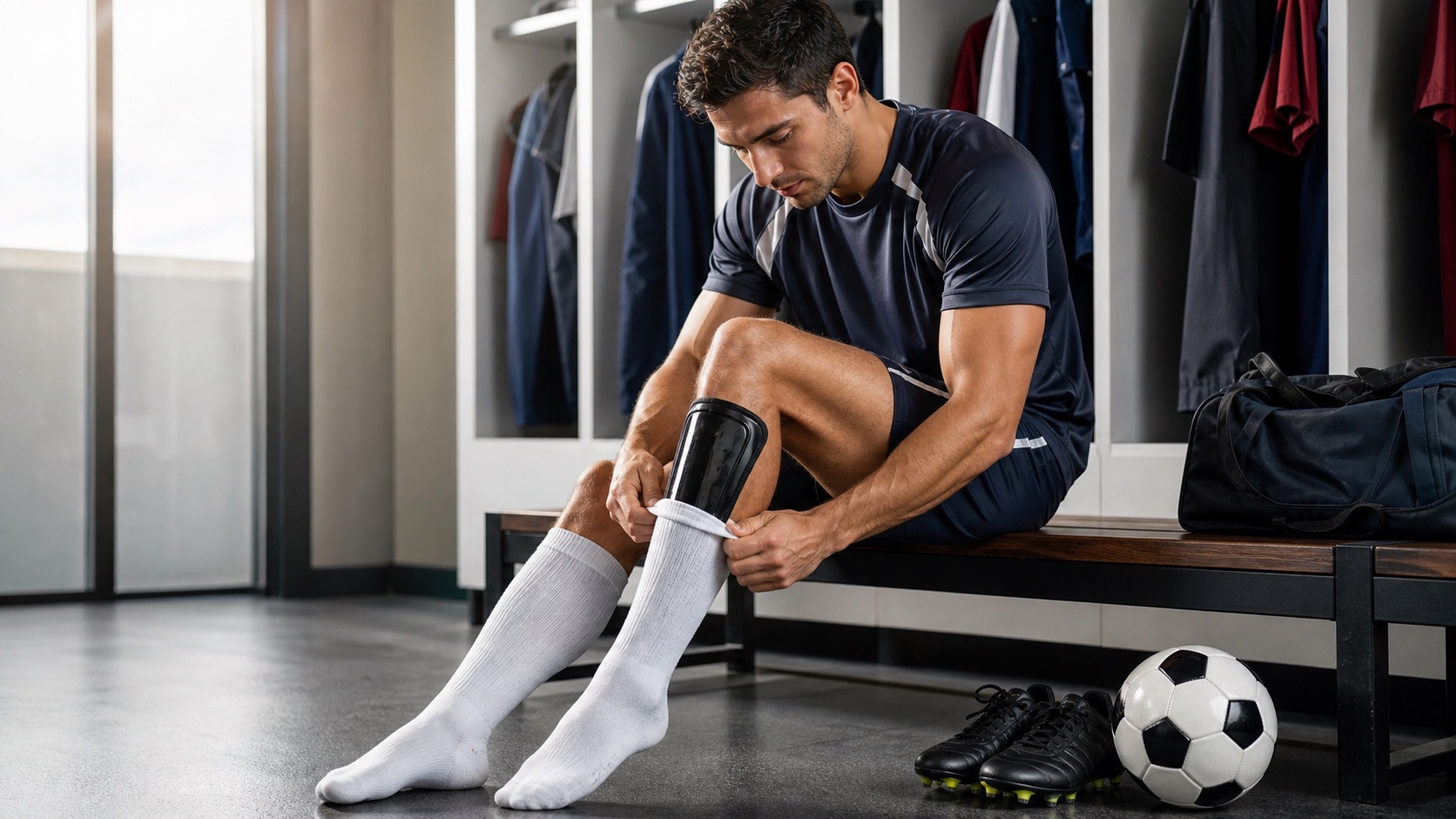

Soccer socks are part of the player's kit, but their job goes beyond matching the uniform. They must fit with boots and shin guards, remain comfortable while running and stay in position through changes of direction. A suitable pair balances length, stretch, cushioning and moisture management without adding unwanted bulk.
Whether you are choosing one pair or ordering for a team, use the following points to compare options.
Get the Length Right
Traditional soccer socks reach to the knee so they can cover the shin guards. The cuff should sit securely below the knee without rolling down or feeling restrictive. Youth players need a proportionate leg length; simply sizing down an adult sock may leave the heel and padding in the wrong positions.
Some players use separate sock sleeves with performance socks inside their boots. This setup changes how the pieces overlap, so teams should confirm that the final kit meets the rules of their competition before match day.
Check the Fit Around Shin Guards
A soccer sock should stretch over the shin guard without becoming transparent, distorted or excessively tight. If the guard has an ankle section, check the combined volume inside the sock and boot.
Try the complete setup before playing:
- Put on the match-day base sock or foot section.
- Position the shin guard as intended.
- Pull the soccer sock up smoothly without twisting it.
- Lace the boot and walk, jog and change direction.
- Check for pressure at the toes, ankle and cuff.
The sock should not be used to compensate for an incorrectly sized shin guard.
Choose Cushioning That Works With Your Boots
Light cushioning preserves space and ball feel in close-fitting boots. Targeted cushioning under the heel and forefoot can add comfort without making the entire sock thick. A thicker footbed may suit training or a slightly roomier boot.
Always test the sock with the actual boot. A pair that feels soft by itself may crowd the toes once the laces are tightened.
Look for a Performance Fiber Blend
Soccer socks commonly blend polyester or nylon with elastane. Synthetic fibers can help the sock dry efficiently and withstand repeated training, while stretch keeps the heel and arch aligned. Cotton may add softness but can retain more moisture, so the percentage and intended use matter.
Useful construction features include:
- Reinforced heel and toe zones
- Elastic support through the ankle or arch
- A smooth toe seam
- Ventilated panels
- A shaped heel pocket
- A wide, stable cuff
No single feature determines quality. Fit and knit consistency matter throughout the whole sock.
Match Socks to Training Frequency
Players who train several times a week need enough pairs to avoid rewearing damp socks. Durable yarns, colorfast dyes and straightforward care become especially important for team programs. Light and dark kits should be washed separately, following the label, and dried fully before the next session.
Inspect high-friction areas frequently. Thinning beneath the forefoot or at the heel can change the feel inside the boot even before a hole appears.
Plan Team Colors and Personalization
For clubs, school teams and retailers, color accuracy and size allocation deserve early attention. Confirm:
- The exact kit color under consistent lighting
- Logo size and placement
- Knitted, embroidered or printed decoration method
- Adult and youth size breakdowns
- Sample approval and production lead time
- Packaging and player-number requirements
Our guide to custom soccer socks covers the ordering process in more detail.
Frequently Asked Questions
Why are soccer socks so long?
Their length helps cover shin guards and creates a uniform kit appearance. Competition rules may also specify how equipment must be covered.
Should soccer socks be thick?
Only as thick as the boot fit allows. Many players prefer targeted cushioning rather than heavy padding through the entire foot.
How should soccer socks fit?
They should be close-fitting, with the heel in place and no wrinkles inside the boot. The cuff should stay up without causing discomfort.
Are soccer socks and football socks the same?
In many markets, “football socks” refers to the same knee-high socks used for association football, called soccer in the United States and some other countries. Rugby and American football socks may have different kit requirements.
Explore our soccer and football socks for training, match kits and custom team programs.